
Scheme:
Social Housing Decarbonisation Fund Wave 2.1
Technologies used:
Solar PV, Ventilation, Loft insulation
Region:
South East
Client type:
Housing
Your partner for a low carbon future
Social Housing Decarbonisation Fund Wave 2.1
Solar PV, Ventilation, Loft insulation
South East
Housing
Social homes targeted for retrofit
Funding awarded
Colchester Borough Homes (Colchester) recognised early on that successful retrofit delivery depends on more than just technical measures, it depends on trust. To meet this challenge, the organisation brought retrofit advisor roles in-house, embedding them directly within the team to lead on resident engagement.
This decision has transformed the retrofit experience for residents. Advisors have become familiar, trusted faces, building relationships, simplifying complex information and ensuring that residents feel supported throughout the process.
Martin Norgett, strategic client for asset management at Colchester City Council, said: “Our focus is on energy efficiency and benefits to our tenants in the form of reducing their utility bills.
“We are on target to reach EPC-C by 2030 and have a commitment in our proposed asset management strategy, that all improvements to our homes will work to the principle of ‘energy related investment.”
We're here to help our residents and to make sure that our residents are actually happy about what we're doing and hopefully they feel like they're a part of the process as well.
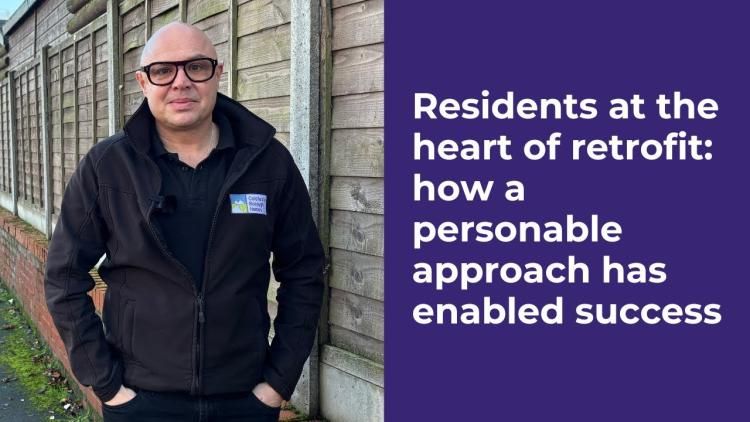
Delivering retrofit works in social housing is rarely straightforward. For Colchester, the challenge wasn’t just technical, it was human.
Many residents were unfamiliar with retrofit terminology and sceptical about the benefits. Some expected visible upgrades like new windows or solar panels and were disappointed when measures like ventilation or insulation were prioritised instead. Others were hesitant to engage at all, particularly older tenants or those with complex needs.
Access to properties was another hurdle. Missed appointments, unanswered calls and survey fatigue slowed progress.
In some cases, residents who initially agreed to participate later withdrew, overwhelmed by the number of visits or unclear about next steps.
The collapse of Colchester's chosen contractor added further disruption. Snagging issues, incomplete documentation and confusion around responsibilities created further uncertainty for residents and pressure on the delivery team.
Externally managed resident liaison roles also proved problematic. Mixed messages and lack of follow-through eroded trust, with some residents unsure who to contact or what to expect.
Colchester Borough Homes asset manager Matthew Swingwood said: "I firmly believe that we had more success/less direct issues where all resident communication was managed by Colchester Borough Homes, so would certainly lean towards that in the future/away from the contractor using an resident liaison officer."
From the outset of the Social Housing Decarbonisation Fund Wave 2.1 programme, Colchester made a strategic decision to bring retrofit advisor roles in-house. Originally planning to recruit one advisor, the team quickly recognised the scale and complexity of the work and doubled the number to two before delivery began.
This early investment laid the foundation for a resident-first approach. The advisors were embedded within the organisation from day one, ensuring consistent communication, personalised support and a joined-up experience for residents.
Their role was designed to be more than technical. It was relational and collaborative. The advisors:
This model gave Colchester full control over messaging and delivery, allowing for a more joined-up and resident-focused experience from the very beginning.
Launching the retrofit advisor model at the start of the project gave them a strong foundation for resident-led delivery. By recruiting two advisors instead of one, the organisation ensured that every resident had access to consistent, personalised support from day one.
The impact has been clear:
Matt added: “We know that many of our residents are very well informed and want to be assured that they are living in homes that are fit for purpose, are affordable and are not left in a condition that may ultimately become detrimental to their health and wellbeing.”


