
Banishing cold winters in homes on the Isle of Wight
Three social housing tenants have been describing how their homes have been transformed thanks in part to government funding.
Lawrence Brown, Alan McGregor-Rossetti and Deborah Carless are tenants of Southern Housing and live on the Isle of Wight.
All three say their homes are much more comfortable to be in, especially in the winter months, since they were upgraded.
Southern Housing is a provider with properties across the south of England, London and the Midlands.
One of its key objectives is to ‘create comfortable and sustainable homes’ for its residents.
That’s why it has committed to retrofitting its properties, so they meet a minimum EPC C (energy performance certificate) rating by 2030 and that they are net zero by 2050.
Southern Housing’s ‘Project FutureFit’ is a rolling upgrade programme being delivered across its huge portfolio of properties.
On the Isle of Wight, more than 100 of its homes have benefitted from a range of efficiency measures to make them warmer, healthier and cheaper to heat.
The improvements include cavity wall insulation, loft insulation, solar PV, new ventilation, low energy lighting and a switch to low carbon heating systems.
Many of its homes on the island have had multiple measures installed.
The work has been funded through the government’s Social Housing Decarbonisation Fund (SHDF) Wave 2.1 which we administer and assure at Salix.
We carry out the work on behalf of the Department for Energy Security and Net Zero.
Since the work was finished, we’ve not had all of the heaters turned on, not even in the winter.
We only use the one in the hallway just to take the chill off.
In total, Southern Housing received £670,000 from Wave 2.1 of the SHDF and invested almost £2 million of its own money to improve 106 properties on the island.
It says the success of the upgrades is down to the dedication and hard work of its internal teams, its retrofit coordinators, and its installers and contractors.
Alan McGregor-Rossetti has lived on the Isle of Wight since 2004, and moved to his current home in 2013, where he lives with his wife.
He was offered the bungalow in Newbridge, on the west side of the island, after a traumatic accident which restricted his mobility.
Alan says before his home was upgraded, it leaked energy and cost a fortune to keep warm: “This house doesn’t have gas”, he says. “The storage heaters that were here when I first moved in simply didn’t work.
“I replaced them with wall-mounted electric panel heaters but they needed to be on all the time in winter. I was paying as much as £4,000 each year for my electricity”, he says.
It was a similar experience for Deborah Carless, who lives with her husband in the rural village of Shorwell.
“We had to rely on storage heaters to keep warm and they weren’t very good”, Deborah explains. “They heat the room up to a point but as soon as they go off, it gets cold again.”
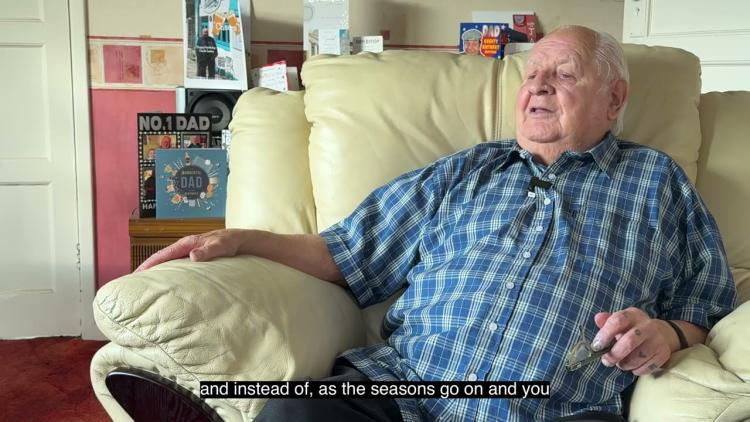
Meanwhile, 85-year-old Lawrence Brown, who lives alone in Lake, close to the island’s costal resorts of Sandown and Shanklin, has memories of far worse conditions.
“I can remember this place with the frost on the inside of the glass!”, he recalls.
“It was freezing cold, absolutely freezing but then everyone was hardened to it.”
However, that’s all changed for Mr Brown since the energy efficiency of his home, where he has lived since the 1960s, was given a significant boost.
The property has had insulation, solar panels and upgraded heating.
Lawrence estimates his energy bills have been cut by at least 20 per cent and his house is warm all the time, even in the coldest months.
He also believes there’s another significant benefit: “My family are no longer worried about me being in a freezing home”, he says.
Back in Shorwell, Deborah Carless has noticed a difference thanks to similar improvements to her house.
“Since the work was finished, we’ve not had all of the heaters turned on, not even in the winter”, she says. “We only use the one in the hallway just to take the chill off.”
Over in Newbridge, Mr McGregor-Rossetti, speaks highly of the upgrades.
“I can't tell you, we're just amazed at this”, he says. “I’m very thankful actually, because after all these years, it has made an enormous difference to our lives.”
Alan, Deborah and Lawrence were kind enough to allow us into their homes to talk to us about the improvements they’ve benefitted from. Watch the short film they kindly took part in.
Our thanks go to Southern Housing and its residents for welcoming us to the Isle of Wight and our Department for Energy Security and Net Zero colleague Joe Dean for asking the questions.


