Solar power - turning rooftops into energy assets
The opportunity
Solar power is becoming an increasingly important part of the UK’s energy mix, offering organisations a way to generate electricity on-site, reduce energy costs and support decarbonisation.
The technology has developed rapidly over the past decade. Rooftop solar can now be installed quickly and, when combined with battery storage, can help organisations make better use of the electricity they generate.
In his Tomorrow’s Energy podcast interview, Chris Hewett, chief executive of Solar Energy UK, describes rooftop solar as “very cost effective” and “easy to deploy.”
He adds: “Paired with a battery, it’s becoming a very, very popular way to reduce energy bills, whether it’s in the home or in commercial buildings or public sector buildings.”
How it works
Solar panels generate electricity during daylight hours, allowing buildings to use power on-site rather than buying all their electricity from the grid.
Battery storage can increase the benefits by storing surplus electricity for later use. This is particularly useful for buildings where energy demand does not match solar generation.
As Chris explains: “If you have a battery, then you can put it in the battery, you can save it and use it later.”
The right approach depends on the building. A school, hospital, university or housing development will have different patterns of energy consumption, meaning each project needs to be designed around its individual requirements.
Benefits for the public sector
Solar has significant potential across public buildings, including schools, hospitals and universities. Projects can be delivered through a range of funding models, meaning organisations do not necessarily have to meet the full upfront cost themselves.
The resulting lower energy bills can help release money for core services while also reducing carbon emissions.
Chris says the economic case is increasingly compelling: “What is just absolutely clear is that the economic case for putting solar and usually a battery on the side in most buildings is pretty strong.”
Wider impact
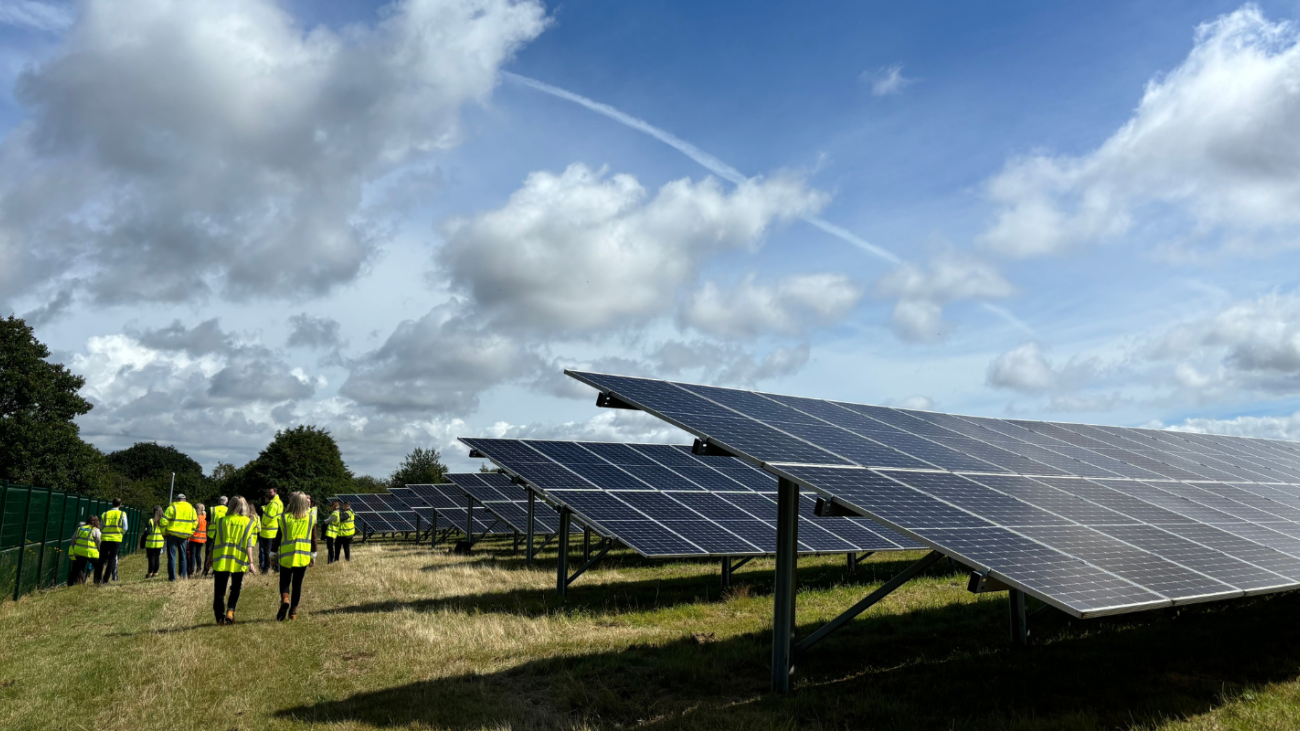
Solar is no longer limited to rooftops. Ground-mounted solar farms are now widespread, while floating solar is emerging as another option for suitable sites.
Chris describes solar as “the fastest growing energy technology in the history of humankind” and highlights its potential to support the wider electrification of transport and heating.
He also points to the role of Solar Energy UK in working with policymakers. The organisation has developed a UK solar roadmap and is working closely with government and industry, with a target of more than 50GW of solar capacity by 2030.
The future
For organisations considering solar, the technology offers more than a route to lower bills. It can provide greater control over energy use, support long-term decarbonisation and contribute to energy resilience.
As Chris explains: “It’s such a good technology. It even works in a UK climate.”
With solar, battery storage and electrification developing together, the potential for organisations to generate, store and use more of their own clean energy is set to grow.