Historic legacy meets low-carbon future
We’re proud to support the world-famous Royal Observatory Greenwich as it heads towards energy efficiency
Built in 1675 out of recycled materials at the bequest of Charles II, who wanted ‘to find out the so much-desired longitude of places for perfecting the art of navigation’ and now the home of space and time - the Royal Observatory Greenwich is preparing for the next stage in its sustainability journey: cutting carbon.
The Royal Observatory is undergoing a once-in-a-generation capital transformation, ‘First Light’, which will repair the built heritage while transforming the visitor experience with new and renovated galleries, an innovative landscaping scheme and a whole new learning programme.
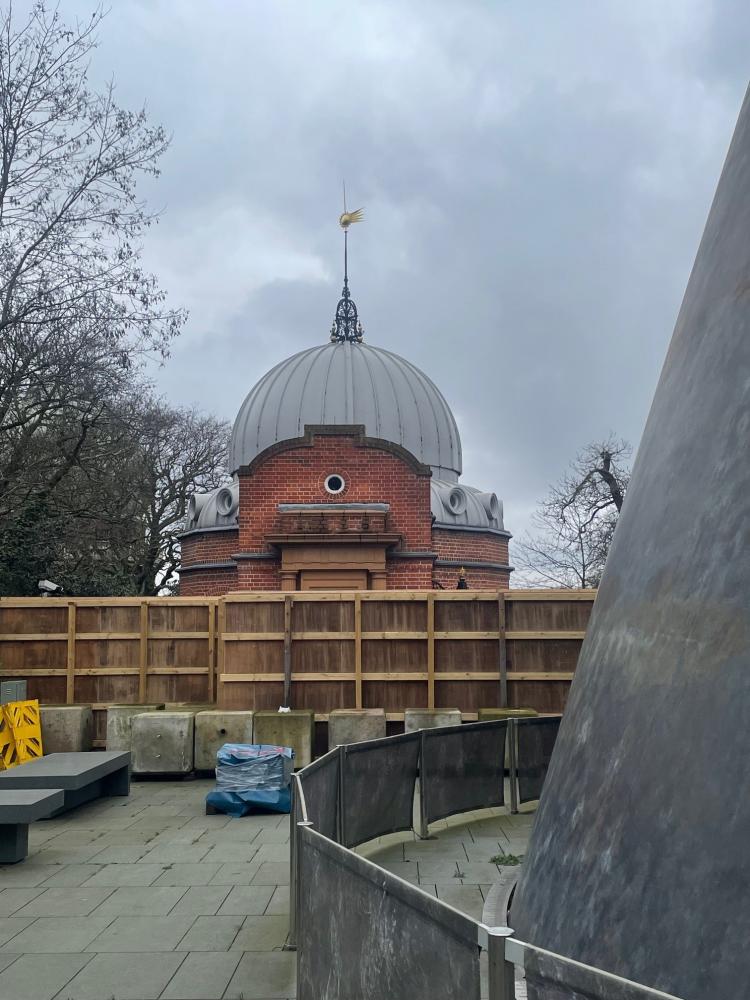
Work in progress at the Royal Observatory in Greenwich
Photo credit: Salix Finance
Underpinning this transformation is the modernisation works which are part of the UK’s drive to make historic public buildings more energy efficient.
This is where our teams at Salix get involved.
Through Phase 4 of the Public Sector Decarbonisation Scheme, the Observatory, has been awarded £200,000 to support decarbonisation works that will help reduce emissions while preserving one of the country’s most significant heritage sites.
This is the second investment from the scheme in Royal Museums Greenwich (the brand name for the historic sites that includes the Observatory, alongside the National Maritime Museum, Queen’s House, Cutty Sark and the Prince Philip Maritime Collections Centre), with the National Maritime Museum receiving a donation towards the decarbonisation of the site in 2023.
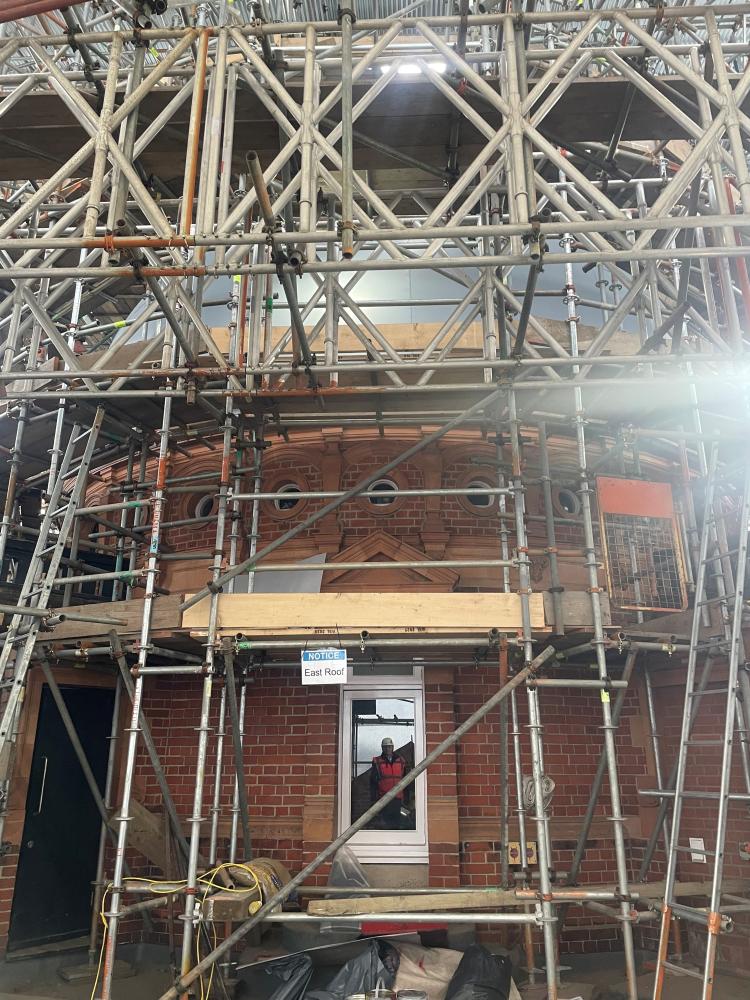
The Royal Observatory encased in scaffolding
Photo credit: Salix Finance
At Salix, we deliver the Public Sector Decarbonisation Scheme on behalf of government, and our teams are working alongside the museum to guide project leaders through the process, ensuring milestones are met and the works are delivered on time.
Our team members programme co-ordinator Patrick Lane and programme manager Laura Couldrey visited the site to meet the people behind the ambitious plans.
Although the Public Sector Decarbonisation Scheme installations have not yet begun, the transformation of the Observatory site is already visible. During the recent hard-hat visit, Patrick and Laura climbed scaffolding surrounding the historic Grade II Listed South Building, getting a rare close-up view of restoration works across the buildings’ roofs, windows and exterior fabric.
Set in Greenwich Park at the heart of the UNSECO World Heritage Site ‘Maritime Greenwich’, the Observatory’s terracotta and red-brick buildings sit against spectacular views of the River Thames and the London skyline.
The South Building is incredibly complex – 1890s masonry and ornate lead detailing are being carefully restored piece by piece, ensuring the building’s distinctive character remains intact.
Patrick said: “Getting up close gives you a real sense of the history embedded in these buildings. Every beam and brick has a story, so the project is about respecting that heritage while preparing the site for the future.”
The work highlights the delicate balance between conservation and sustainability. The Observatory is one of the most recognisable historic sites in the UK, so every decision must be carefully considered.
Patrick added: “Everyone involved, from the engineers to conservation specialists, needs to be tuned in to both the sensitivity of the site and the ambition of what the Observatory team is trying to achieve.”
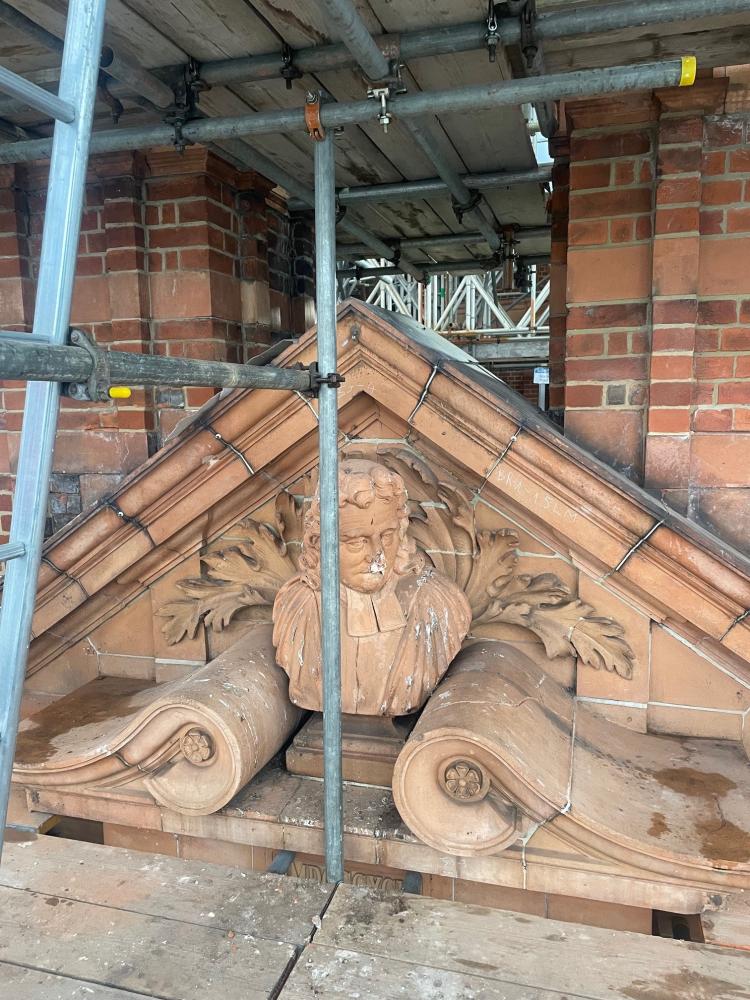
The teams are working diligently to carry out the works whilst preserving the precious buildings
Photo credit: Salix Finance
As a curious collection of Grade I, II, II* listed buildings, the Observatory requires careful handling: existing materials are being retained where possible, traditional lead works are being moulded on site to match historic designs, and future housing for air source heat pumps has been carefully planned in consultation with Historic England to fit within the heritage setting.
Once complete, the site will see the installation of an air source heat pump and electric heating, helping to reduce reliance on fossil fuels and improving the building’s long-term energy efficiency.
A global hub for the public understanding of astronomy past, present and future and home to London’s only planetarium, the shift to low-carbon infrastructure marks a new chapter for the Observatory.
Visitors come to the Observatory from all over the world to stand upon Meridian Line, which marks the Prime Meridian of the world, Longitude Zero (0° 0' 0") and which serves as the reference point for every place on Earth and Greenwich Mean Time.
The museum that protects that rich heritage is quietly preparing for a more sustainable future. At Salix, we’re proud to support that journey.
The work reflects the wider ambitions of Royal Museums Greenwich under its strategic plan 'Charting Our Course', which places environmental sustainability at the core of its mission.
For our visit we were joined by Trust and Foundations Fundraiser (First Light) at Royal Museums Greenwich, Emily Hooke, who explained the work happening on site.
Emily said: “The work reflects the wider ambitions of Royal Museums Greenwich under its strategic plan Charting Our Course, which places environmental sustainability at the core of its mission.
“We want to ensure that these historic buildings that have inspired generations of visitors to learn about space exploration and the history of science remain resilient in the face of climate change and look forward to the future of science.
“That means improving the sustainability of our buildings and operations but also using our platform to raise awareness and advocate for environmental action across the museum sector.”
In a setting where centuries-old artefacts tell stories of Britain’s past, the next story being written is about the future - ensuring the buildings that protect that heritage are ready for a low-carbon world.
Thank you to Emily and the team for hosting our visit and sharing your plans and vision for the future – we’re proud to join you on your net zero journey.