
Royal Air Force Museum completes landmark £2.9 million decarbonisation project
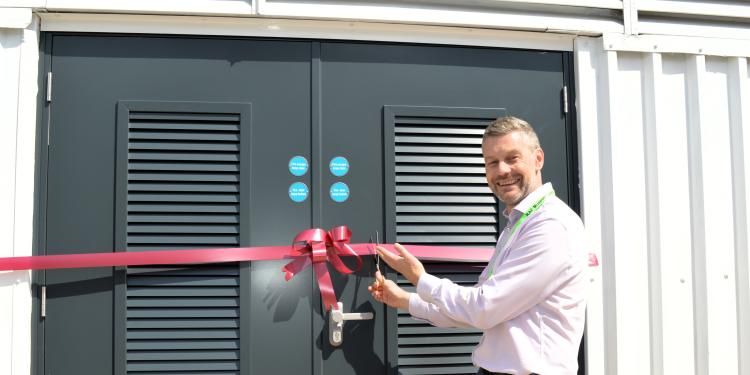
We visited the low carbon project which is helping to protect a nationally important heritage site while cutting carbon emissions
The Royal Air Force Museum's historic hangars were built to protect some of the most significant aircraft in British aviation history. Today, they are helping to demonstrate how even complex heritage buildings can play a role in the UK's transition to net zero.
We were delighted to visit the Royal Air Force Museum in London this week to celebrate the completion of a major decarbonisation project supported through the Public Sector Decarbonisation Scheme.
The £2.9 million project received £2.4 million through the Public Sector Decarbonisation Scheme. This has transformed the museum's energy infrastructure and is expected to save 345.6 tonnes of direct carbon emissions and more than £52,400 in energy costs every year.
We joined teams from the RAF Museum, Alternative Heat and other project partners to mark the completion of the work and officially open the museum's new Energy Centre.
During the visit, we had the opportunity to see first-hand the impact the project is already having across the site in Grahame Park Way, Colindale, on the historic former Hendon Aerodrome site
Our tour began in Aeroplay!, the museum's aviation-themed indoor play area, where new heating and ventilation systems have increased comfort for visitors and staff, with feedback noting the improved temperature control. We also visited the upgraded café and retail spaces, where the benefits of the new systems are already being felt.
The project has been phenomenally successful. The feedback has been fantastic from all those that have used the facilities.
Visitors are of course key to the site. The museum is home to legendary aircraft and incredible stories from more than a century of aviation history. This is where you can see the Spitfire, Hurricane and Lancaster bomber – all housed within its vast hangars.
Our visit was very much focused on how this decarbonisation project has transformed the museum’s energy infrastructure whilst protecting a nationally important collection.
We toured the new Energy Centre, the heart of the project, which houses four heat pumps – two water source and two air source units – alongside a new building management system. The low-carbon heating network now serves buildings across the estate, helping to reduce emissions while improving comfort and efficiency.
The project was not without its challenges. Significant cost increases during delivery meant the scheme had to be retendered, with Alternative Heat brought on board to review and redesign the approach. Working collaboratively, the team developed a revised solution that maximised the available grant funding and ensured the project could still deliver substantial carbon savings.
Despite site constraints and periods of disruption, the project was completed on time by 31 March 2026.
Throughout the visit, it was clear how much of a difference the improvements have made.
Leadership team PA, Emma Mistry, at the RAF Museum team explained how the new systems have transformed office environments, providing heating and cooling that can be managed more effectively to meet the needs of staff throughout the year.
During our visit RAF Museum chief executive Maggie Appleton said how important partnership was in delivering the project and thanked our Salix team.
This project represents a major investment in the future of the RAF Museum. By modernising our energy infrastructure, we are both reducing our environmental impact and ensuring that our historic buildings and world-class collections can be protected and enjoyed for generations to come. We are hugely grateful to Salix Finance and the Department for Energy Security and Net Zero for their support, and to the brilliant partners and contractors who have helped deliver this important programme.
She especially thanked our Salix team member, programme manager Robert de Grouchy.
She said: “Rob has made such a difference and has been a joy to work with. We look forward to continuing our work with you.”
Maggie also thanked Alternative Heat and the wider delivery team for helping to bring the project to completion.
Rob said: “It’s been a fascinating project to work with. It’s superb to see how these historic hangars are embracing the future. It’s very exciting - bringing cutting-edge low carbon technology to one of our most significant heritage sites.
It has been a pleasure to work with the team and be involved with a project so impressively delivered. Everyone involved have produced a demonstrably excellent project and the benefits are already being realised. It's something worth celebrating."
The museum is already looking ahead to future improvements. The infrastructure has been designed so that additional measures can be added as further funding becomes available, creating a strong platform for continued progress towards net zero.
Our director of public sector decarbonisation, Ian Rodger said: “It’s always amazing to visit completed projects that we have funded and to hear the stories of the challenges in delivering them and how they were overcome.
“I saw this project just over a year ago when the works were in progress and it was great to see it finished, operational and the benefits being enjoyed by the visitors to the museum.
Days like today, where the temperature is in the high 30s, remind us of the climate change challenge we face in the UK and across the planet. The fact that we have been able to provide zero carbon heating and cooling to such a significant museum is fantastic. No building should be impossible to help. If we can deliver zero carbon heating to a First World War-era aircraft hangar, then we can do it anywhere.
By replacing ageing systems with modern low carbon technology, the RAF Museum has not only reduced its environmental impact but also created a more comfortable, efficient and resilient estate for visitors, staff and for generations to come.
Thank you to the RAF Museum team for hosting us on the day and we look forward to following your net zero progress.


