
Solihull Hospital completes £16.2m green heating transformation to improve patient comfort
New energy centre and advanced heat pump technology will modernise hospital facilities, improve comfort for patients and staff, and help cut annual carbon emissions by 1,812 tonnes a year
A major decarbonisation programme will provide more than 85% of a hospital’s heating through low-carbon technology, creating warmer and more comfortable wards for patients.
The Solihull Hospital project will cut carbon emissions by more than 1,812 tonnes a year - delivering £62,000 in annual energy cost savings - accounting for long-term operational savings for University Hospitals Birmingham NHS Foundation Trust.
Patients and staff at Solihull Hospital are expected to benefit from warmer, more comfortable wards and an improved hospital environment following the completion of the £16.2 million decarbonisation programme.
At Salix we have supported the project through the Public Sector Decarbonisation Scheme, delivered by our teams on behalf of government. The funding has helped paid for state-of-the-art heating technology, improved ventilation and energy efficiency measures across the hospital.
Our Salix team joined hospital staff, Department for Energy Security and Net Zero representatives and project partners including Centrica Business Solutions at a celebratory event to mark the completion of the programme and see the new energy centre for ourselves.

During our visit, we were able to look at the heat pumps on the energy centre roof
Photo credit: Salix Finance
We were able to understand the challenges of undertaking work within a fully operational hospital that operates 24/7.
Executive director at Solihull Hospital, part of University Hospitals Birmingham NHS Foundation Trust, Martin Richardson, said: “The completion of the new energy centre is an important step in our work to make Solihull Hospital more energy efficient and reduce the carbon footprint of our estate.”
During our visit, he explained that for patients, the benefits extend beyond reducing the hospital’s environmental footprint. Maintaining a comfortable, well-ventilated and healthy indoor environment is an important part of creating surroundings in which patients can rest, recover and receive care.
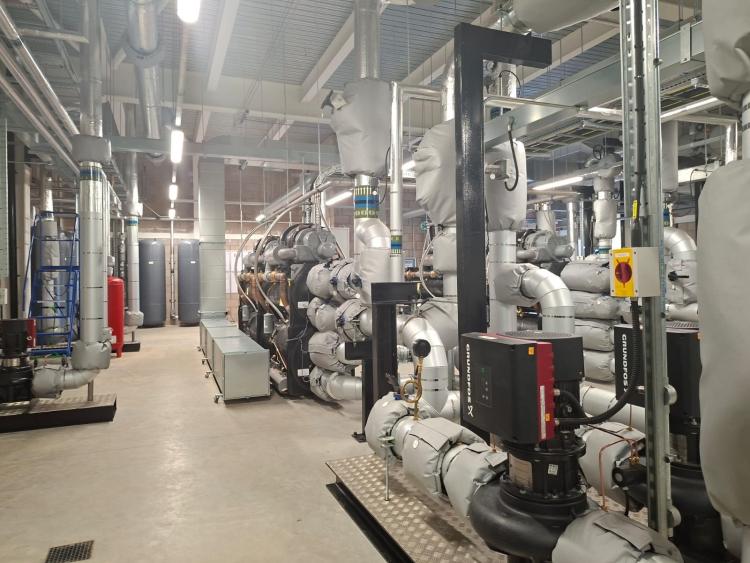
Inside the energy centre at Solihull Hospital
Photo credit: Salix Finance
The new energy centre features an energy-efficient heat pump system, replacing the hospital’s existing electricity and heating infrastructure, and builds on a series of energy efficiency and decarbonisation measures that Centrica Business Solutions has already delivered at the site.
Temperature, air quality, ventilation and lighting can all influence the experience of being in hospital. Research into healthcare environments has highlighted links between aspects of hospital design and patients’ anxiety, stress and wellbeing.
Good environmental design can also support staff by creating more comfortable working conditions.
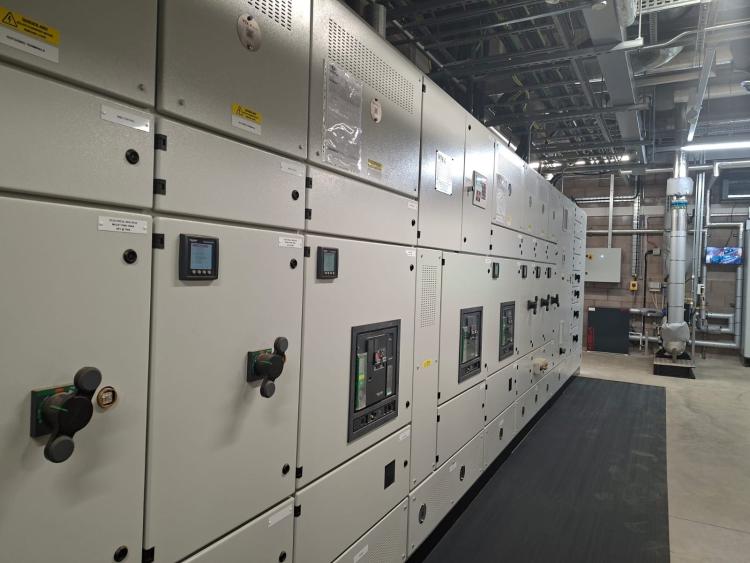
Controls inside the energy centre at Solihull Hospital
Photo credit: Salix Finance
It is important to understand that creating the right environment for patients is an important part of delivering care. People coming into hospital need surroundings where they feel comfortable and supported, and where staff have the best conditions to do their jobs.
Programme manager at Salix Charles Pegg, said: “It’s great to see how the technology has been installed and find out about the challenges involved with that.
“It is important to understand that creating the right environment for patients is an important part of delivering care. People coming into hospital need surroundings where they feel comfortable and supported, and where staff have the best conditions to do their jobs.
“These improvements will help provide a more comfortable environment for patients as well as the teams who work here, while also making the buildings more sustainable for the future.”
The project has also been supported by Carbon and Energy Fund (CEF). CEF supports NHS trusts and public body organisations to improve energy infrastructure and reduce overall emissions.

On the roof at the energy centre
Photo credit: Salix Finance
A two-phase transformation
The decarbonisation programme was delivered through two phases, supported by a combined £16.2 million in government grants.
The first phase received £4.8 million through Phase 3a of the Public Sector Decarbonisation Scheme, contributing towards a £4.9 million project.
Completed on 1 October 2024, the work included the installation of a cascade heat pump system, improvements to heating controls and cavity wall insulation across key building façades.
Around 2,500 older light fittings were also replaced with energy-efficient LED alternatives, helping to reduce electricity consumption.
The building management system was upgraded with new control outstations and improved scheduling and temperature settings, allowing heating systems to operate more efficiently and respond more effectively to the needs of the building.
The second phase, supported by a further £11.4 million grant through Phase 3c, formed part of a £13.3 million project and reached practical completion on 16 October 2026.
At the heart of this phase was the creation of the energy centre, incorporating a 2MW cascade heat pump system. The system combines internal water-source heat pumps with external air-source heat pumps to provide a more sustainable source of heating.
The work also involved decommissioning the hospital’s ageing gas-fired combined heat and power unit, replacing it with lower-carbon technology.
Further improvements included the installation of double glazing, ventilation upgrades incorporating new air handling units and the replacement of an additional 1,000 light fittings with energy-efficient LEDs.
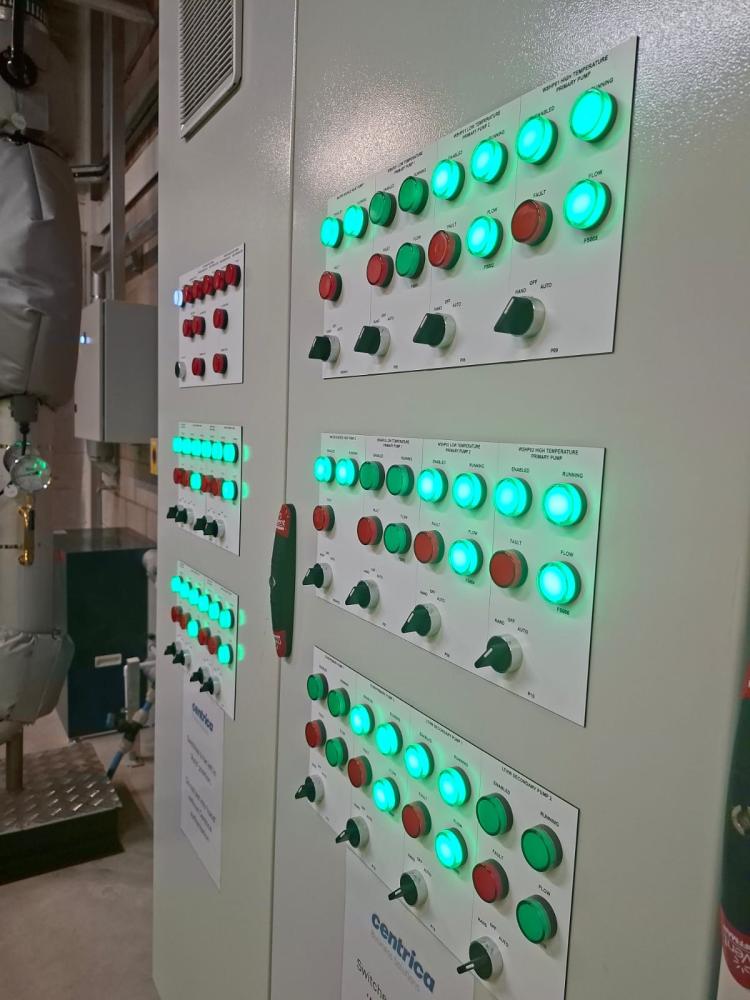
The energy centre is already having an impact at the hospital
Photo credit: Salix Finance
Supporting healthier hospitals for the future
Solihull Hospital is a district hospital serving the local community and wider Birmingham region. It is part of University Hospitals Birmingham NHS Foundation Trust, one of England’s largest teaching hospital trusts, which also includes Queen Elizabeth Hospital Birmingham, Birmingham Heartlands Hospital and Good Hope Hospital.
The hospital provides a range of outpatient, inpatient and urgent care services, making its facilities an important part of healthcare provision for local residents.
Charles added: “Projects like this demonstrate how investment in decarbonisation can deliver benefits beyond carbon savings. By modernising their heating, ventilation and energy systems, hospitals will create better environments for patients and staff while making their buildings more efficient and sustainable.
“The improvements at Solihull Hospital show how public sector organisations can make significant progress towards their environmental ambitions while investing in essential public services.”
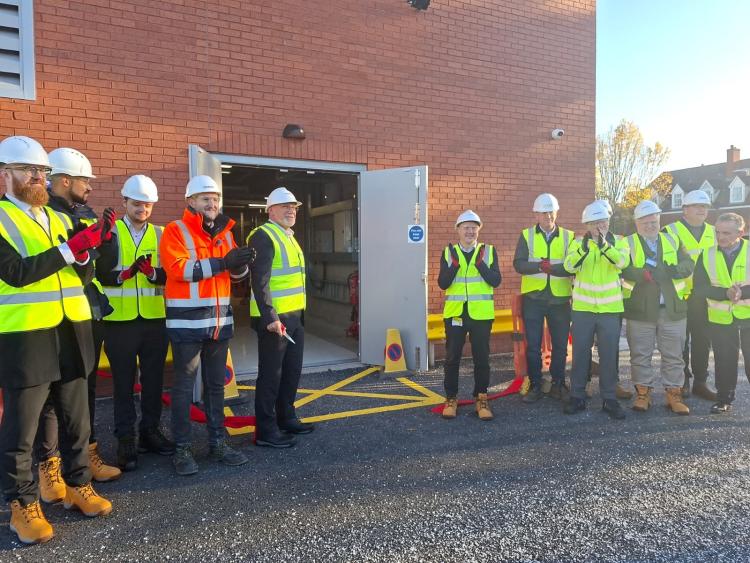
Executive director at University Hospitals Birmingham NHS Foundation Trust, Martin Richardson, cuts the ribbon at the new energy centre
Photo credit: Salix Finance
The completed programme marks an important step in modernising Solihull Hospital’s infrastructure, combining lower-carbon technology with practical improvements designed to benefit patients, staff and the wider NHS.
With annual carbon emissions expected to fall by around 1,812 tonnes, the project will also contribute to the NHS’s wider ambition to reduce its environmental impact and move towards a more sustainable healthcare system.


