The University of Cambridge invests in a sustainable future
Universities continue to play a pivotal role in the UK’s journey to net zero, acting as hubs of expertise, innovation, and research that can help unlock practical solutions to reduce carbon emissions.
As part of this mission, our team at Salix recently visited Cambridge to review the progress of two major projects awarded funding under Phase 3b and Phase 3c of the Public Sector Decarbonisation Scheme.
The visit focused on Keynes House at the Cambridge Judge Business School and the Donald McIntyre Building, both key sites in the university’s multi-year programme to cut emissions across its estate.
The university’s Estates Division has been awarded a total of £1,103,175, including an £808,201 grant for the Donald McIntyre Building, home to the Faculty of Education for this work.
Our team first visited Keynes House which is one of the first buildings to be retrofitted with air source heat as part of the university’s decarbonisation plans.
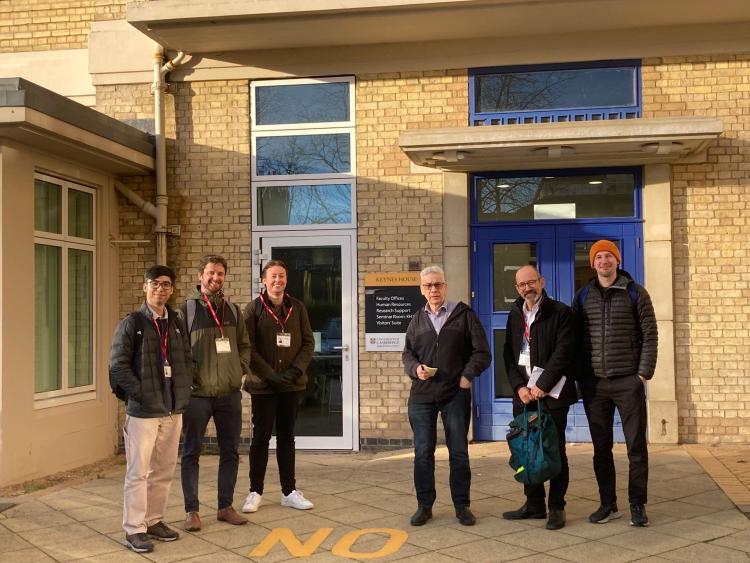
The team meets with university energy experts at Keynes House, from left, Marcus Tang, Salix, Robert Throssell, Salix, Lloyd Ross from the Department for Energy Security and Net Zero, Martin Kernan who is facilities project manager at the Cambridge Judge Business School, sustainable construction manager Alexander Reeve and Sebastian Lunt from Salix
Photo credit: Salix Finance
The university’s Estates Division was awarded nearly £300k from the Public Sector Decarbonisation Scheme for the £1.2 million project.
The air source heat pump covers all four floors and is an efficient alternative to the old gas boilers. The heat pumps will help cut the Cambridge Judge Business School’s Scope 1 carbon emissions by 10%.
The university funded roof and window replacements as part of energy efficiency measures.
Projects such as this one at Keynes House will significantly improve environmental performance and air quality. Overall, 40 tonnes of Scope 1 CO2 emissions will be saved annually, equating to a lifetime saving of 907 tonnes. The university estimates this will be offset by a small rise in Scope 2 emissions averaging 1.2 tonnes per year over the lifespan.
During the visit the team was able to explore the plant room and see the large pumps on the roof of the building.

Inside the plant room at Keynes House
Photo credit: Salix Finance
Sustainable construction manager Alexander Reeve said: “There are always logistical issues around installing large pieces of equipment and on a working site, we need to keep disruption to a minimum.
“However, this project directly supports our ambition to lower our overall carbon footprint and making real progress toward a more sustainable future.”
The Donald McIntyre Building is a newer building and was constructed in 2004, the building has relied on gas-fired boilers to supply heating to radiators, underfloor heating, and air handling units.
With these boilers now at the end of their operational life, the university is moving to a more sustainable system. The air source heat pumps are about to be installed.
The project will replace the primary heating system with air source heat pumps, alongside necessary upgrades to pipework and radiators to operate efficiently at lower temperatures.
The air handling unit heating coils will also be modified to suit and the gas-fired domestic hot water system replaced with local point-of-use water heaters.
The air source heat pumps are being installed in an acoustic enclosure in the building’s grounds, with modified connection works undertaken by the local Distribution Network Operator.
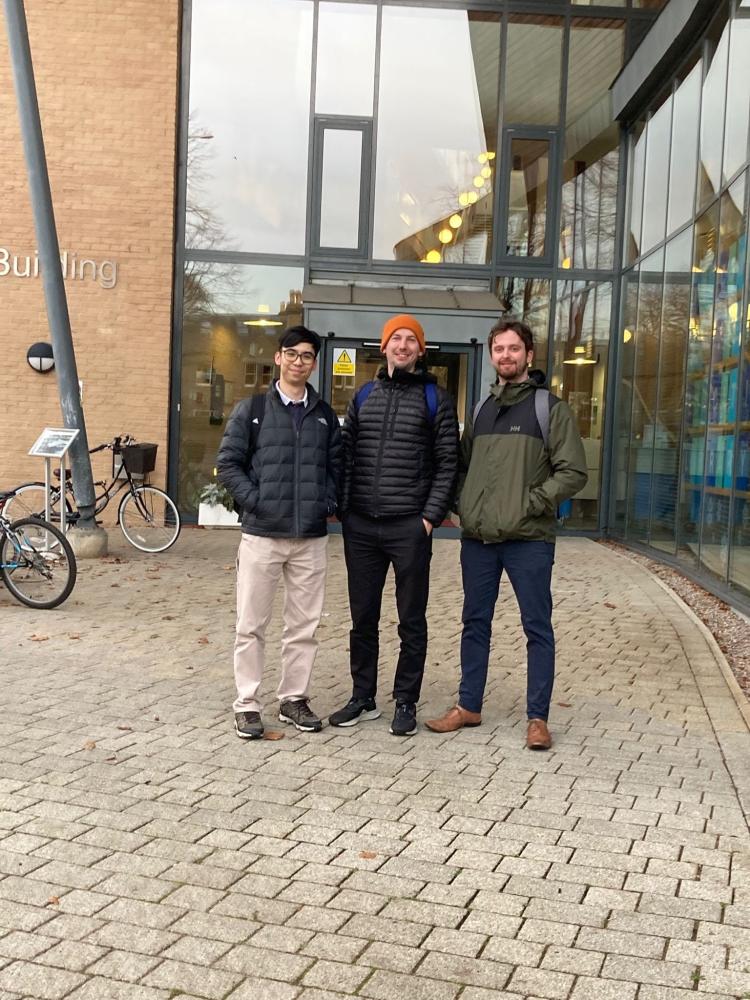
Pictured from left, Salix's Marcus Tang, Sebastian Lunt and Robert Throssell standing outside the Donald McIntyre Building, Cambridge
Photo credit: Salix Finance
By replacing ageing boilers with highly efficient heat pumps and undertaking building thermal enhancement works, we are not only reducing our carbon footprint but also creating a more comfortable and future-ready environment for staff and students alike.
Project leader James Ballantyne said: “The old gas boilers are nearing end of life, so we are at a cost-effective time to undertake this work.
“By replacing ageing boilers with highly efficient heat pumps and undertaking building thermal enhancement works, we are not only reducing our carbon footprint but also creating a more comfortable and future-ready environment for staff and students alike.
“It’s about making sustainable choices part of the everyday operation of our buildings."
The challenges here have been around planning, as well as the logistics of upgrading the power network for the heat pumps.

A heat pump on the roof at Keynes House, Cambridge
Photo credit: Salix Finance
The project team have worked hard to locate the heat pump compound in the building’s garden, with locations constrained by the adjacent listed building, being surrounded by trees with preservation orders, the adjacent dwellings and existing services.
Alexander added: “There have been challenges on both of the sites, from ensuring the students and teams can continue to study and work, to ensuring planning regulations and legal agreements were in order.
“Overall, this project represents a major step forward in our commitment to achieving net zero across our estate.”
Our Salix programme coordinator Robert Throssell has been working closely with the university team through this part of the decarbonisation journey.
He said: “Cambridge has set ambitious carbon reduction targets, and the dedication of their teams is remarkable.
“Visiting the sites gives you a real sense of progress and innovation that goes far beyond numbers on a spreadsheet. These projects demonstrate how public sector buildings can be transformed into sustainable, high-performance facilities.”
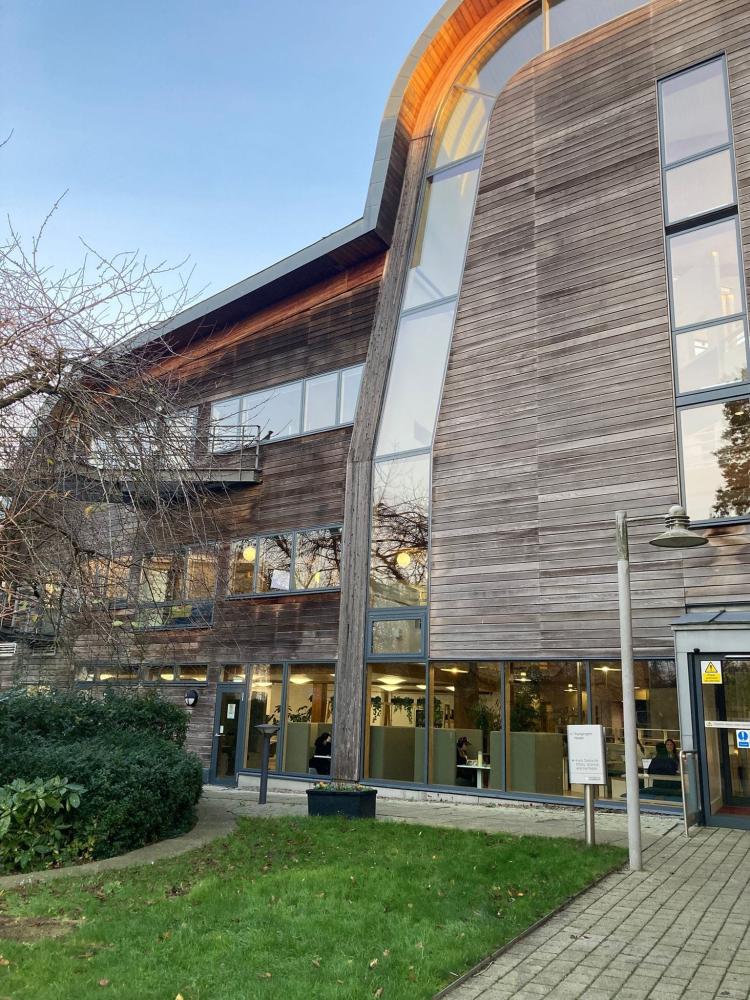
The Donald McIntyre Building at Cambridge
Photo credit: Salix Finance
The day provided our team with a chance to see finished work at Keynes House but also was to see how work is progressing at the impressive Donald McIntyre Building.
The university has committed to reducing energy-related emissions from our operational estate to absolute zero carbon by no later than 2048 making initiatives like these critical to reaching that target.
Through partnerships like these, universities remain at the forefront of driving systemic change in public sector energy use, demonstrating that academic institutions can lead by example in the transition to a low-carbon future.
Thank you to the university team for hosting our visit.