World-renowned postgraduate research institution accelerates its transition away from fossil fuels
We visited the London School of Hygiene and Tropical Medicine (LSHTM) to explore how it’s embarked on its sustainability journey with support from the Public Sector Decarbonisation Scheme.
The school has been accelerating its transition away from fossil fuels to alternative energy since its Energy and Carbon Management Plan was launched in 2020.
The plan outlined a commitment of reaching its ambitious target of net zero carbon emissions by 2030 against a 2018/19 baseline. The Energy and Carbon Management Plan was benchmarked in 2025.
Our Salix delivery team members Victoria Clarke and Anna Kuratnikova, along with Ahmed Ali from the communications team, visited the school's New Education Centre at Tavistock Place. They were keen to see the completed project and to learn more about how the technologies are already making a difference across the site.

The Salix team Anna Kuratnikova, Ahmed Ali and Victoria Clarke visit the London School of Hygiene and Tropical Medicine
Photo credit: Salix Finance
The newly installed technologies have transformed the London School of Hygiene and Tropical Medicine energy structure thanks to funding from the Public Sector Decarbonisation Scheme.
The London School of Hygiene and Tropical Medicine head of sustainability, Ola Bankole who joined Salix team members on the tour was delighted to show us the completed sustainability measures at the school which have been ongoing for seven years. The results of the energy efficiency measures have transformed the site into a more energy efficient building. The school says this has resulted in the reduction of energy-related emissions by 40%.
Ola said: "Communicating a clear sense of shared purpose and vision with the London School of Hygiene and Tropical Medicine community has been key to garnering support for our energy efficiency and sustainability related initiatives.
"This support ensures London School of Hygiene and Tropical Medicine leads the way in delivering high quality public health research in the most environmentally sustainable way."
The London School of Hygiene and Tropical Medicine continues with its commitment to achieving net zero carbon emissions by 2030. The grant funding which is delivered through Salix has accelerated our progress, enabling us to invest in energy-efficient infrastructure into our New Education Centre that opened in January 26 and further our transition away from fossil fuels.
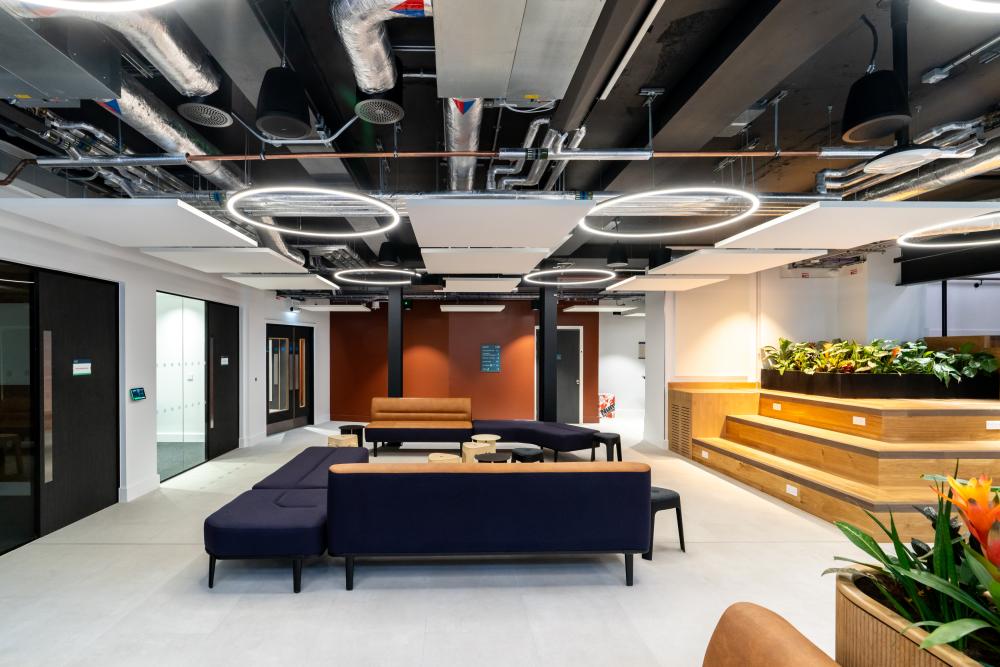
Commitment to creating a modern, energy-efficient education centre
Part of the upgrades included work on the institution's Grade II listed main building, which is almost 100 years old, updating the ageing infrastructure to meet modern environmental standards.
The completed project has seen London School of Hygiene and Tropical Medicine benefit from an estimated 300,000kWh saving a year on its energy bill, the equivalent to the annual electricity consumption of around 70 homes in the UK.
Technologies installed as part of the project have included air source heat pumps on the rooftop, energy efficient chillers, external wall insulation, double glazing and LED lighting.
Director of estates John Starmer said: “ The London School of Hygiene and Tropical Medicine continues with its commitment to achieving net zero carbon emissions by 2030. The grant funding which is delivered through Salix has accelerated our progress, enabling us to invest in energy-efficient infrastructure into our New Education Centre that opened in January 26 and further our transition away from fossil fuels.
“As a global health institution, we recognise that carbon emissions have significant impacts not only on the environment but also on public health. We are committed to leading the transition to a greener, healthier future by taking meaningful steps to improve our own sustainability.”
The school claims the benefits will increase operational efficiency across the buildings and will improve their space as well as delivering energy savings.
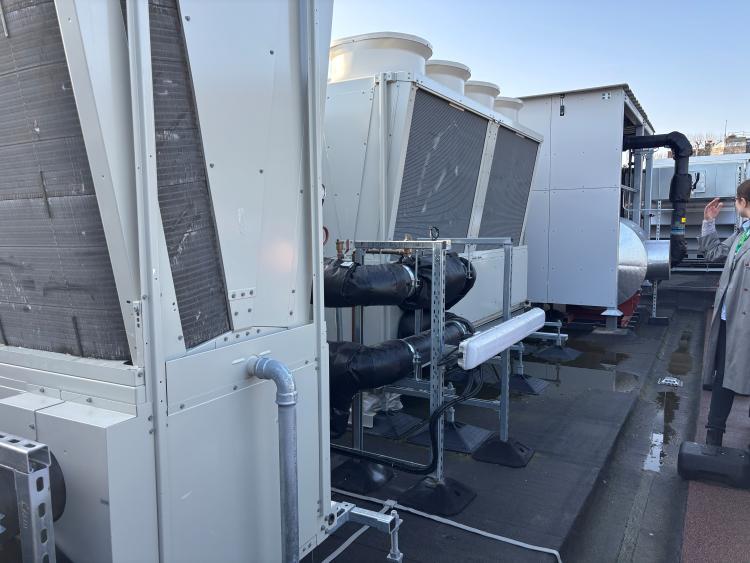
The heat pumps on the rooftop at the London School of Hygiene and Tropical Medicine
Photo credit: Salix Finance
For our team member Victoria Clarke, senior energy and carbon analyst, seeing the work in person brought the scale of the London School of Hygiene and Tropical Medicine ambition into sharp focus.
She said: “It’s fantastic to visit the school and see first-hand the dedication and expertise that have gone into delivering the Public Sector Decarbonisation Scheme works.
“Projects like this show how innovation and determination can turn ambitious decarbonisation plans into real, tangible improvements that enhance both sustainability and the overall education experience."
Sustainability is at the heart of much of the work for the university with the London School of Hygiene and Tropical Medicine renowned for being a global health institution, it clearly recognises that carbon emissions have significant impacts not only on the environment but also on public health.
It is why these works have been a fundamental aspect of the institution's net zero goals, with the works carried out showing a commitment to leading the transition to a greener, healthier future.
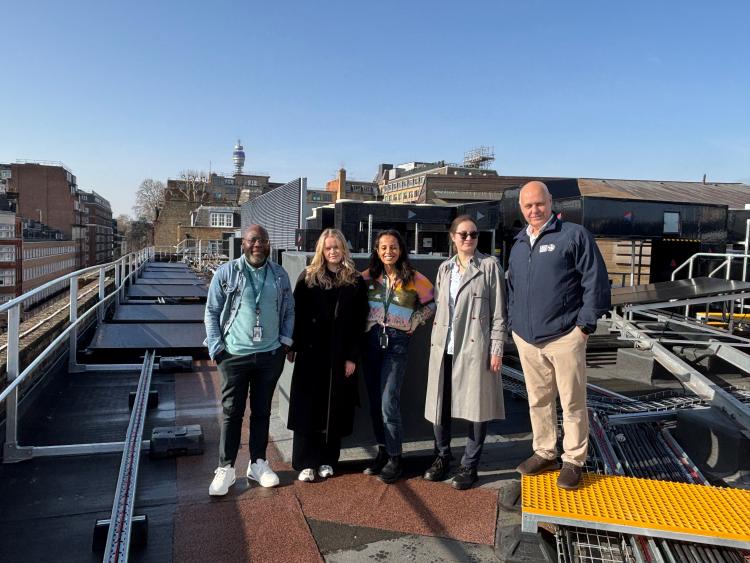
Pictured from left: LSHTM’s head of sustainability, Ola Bankole, Salix's client support officer Victoria Clarke, Sally Karrar, Salix's client support officer Anna Kuratnikova and director of estates at LSHTM John Starmer stand on the roof where the heat pumps are installed
Photo credit: Salix Finance
The school has focused on low carbon heating, increased building energy efficiency, using low carbon electricity and reducing electricity demand to help towards achieving its net zero emissions target by 2030.
Their strategy consisted of the following:
- Developed a space heating policy for LSHTM to outline the heating provision and control strategy and building classification
- Updated engineering standards to achieve higher energy efficiency and lower life-cycle carbon costs of technologies being implemented
- Continued to purchase renewable electricity long term into the future to support carbon reduction targets
- Explored low to zero carbon space heating technologies including district heating where suitable
Salix client support officer Anna Kuratnikova said “It has been a pleasure supporting the London School of Hygiene and Tropical Medicine on the TP1 Tavistock Place project. Their commitment to creating a modern, energy‑efficient education centre aligns closely with the values we champion at Salix.
“Working together to help the London School of Hygiene and Tropical Medicine progress toward its strategic and sustainability objectives has been incredibly rewarding, and we’re proud to contribute to a project that will deliver lasting benefits for students, staff and the wider community.”
Thank you to the team at London School of Hygiene and Tropical Medicine for hosting our visit.