
Scheme:
Scotland’s Public Sector Heat Decarbonisation Fund
Technologies used:
Air source heat pump, Water source heat pump, Solar PV, Hot Water - point of use heaters, Double glazing
Region:
Scotland
Client type:
Local authority
Your partner for a low carbon future
Scotland’s Public Sector Heat Decarbonisation Fund
Air source heat pump, Water source heat pump, Solar PV, Hot Water - point of use heaters, Double glazing
Scotland
Local authority
Total project cost
Reduced emissions annually
St Andrews RC High School in Kirkcaldy has undergone a major school decarbonisation project, replacing ageing gas heating with air source heat pumps, a water source heat pump, solar PV and smart building controls.
Supported through Scotland's Public Sector Heat Decarbonisation Fund, the project is helping Fife Council reduce emissions, improve energy efficiency and create a more comfortable learning environment for 880 pupils.
The project is expected to reduce carbon emissions by approximately 303.56 tonnes of CO₂e every year, making a significant contribution to Fife Council's climate and net zero targets.
✅ 303.56 tCO₂e annual carbon reduction
✅ £2.5 million funding awarded
✅ 880 pupils benefiting
✅ Air source and water source heat pumps installed
✅ Solar PV added to offset electricity demand
✅ New glazing and BMS controls
✅ Improved classroom comfort
✅ More resilient heating system
Service manager Fife Council Property Services, Yvonne Gillespie said: “The Scottish Government’s support has been instrumental in enabling this ambitious project, helping us replace ageing infrastructure with modern low-carbon technologies that will benefit the school for years to come.
“By reducing emissions by an estimated 303.56 tCO2e annually while improving learning conditions and energy resilience, the project is a strong example of the positive impact of public sector decarbonisation funding.”
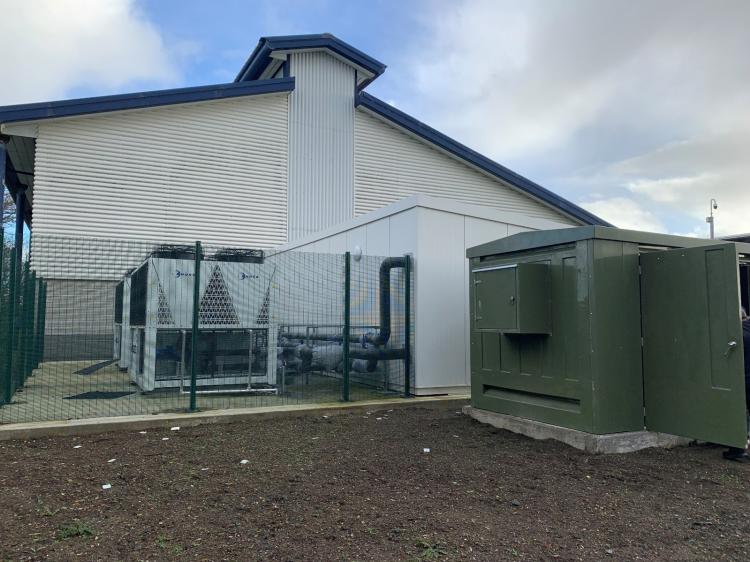
Photo credit: Fife Council
St Andrews RC High School in Kirkcaldy currently supports 880 pupils. This former gas heated building has been converted to prioritise the use of air and water source heat pumps in a cascade arrangement to heavily displace gas usage. The works also included removing long runs of domestic hot water pipework and installing electric point of use heaters to reduce heat loss from aging pipework.
Substantial glazing upgrades were a key part of the project to complement the new heating system alongside roofing upgrades which have been completed prior to this project. Before the upgrade, many classrooms experienced cold draughts in winter and excessive heat gain during warmer weather. The replacement glazing has improved thermal comfort throughout the school, helping create better conditions for learning throughout the year.
The new heating equipment is managed through a fresh BMS controls system designed to optimise performance throughout the year.
To offset increased running costs when moving from gas to electric heating, solar panels on the games hall and one of the teaching block roofs were installed. The addition of solar panels helps to make the annual energy costs comparable to what they were before this project commenced with the key benefits being a more resilient and lower carbon heating system.
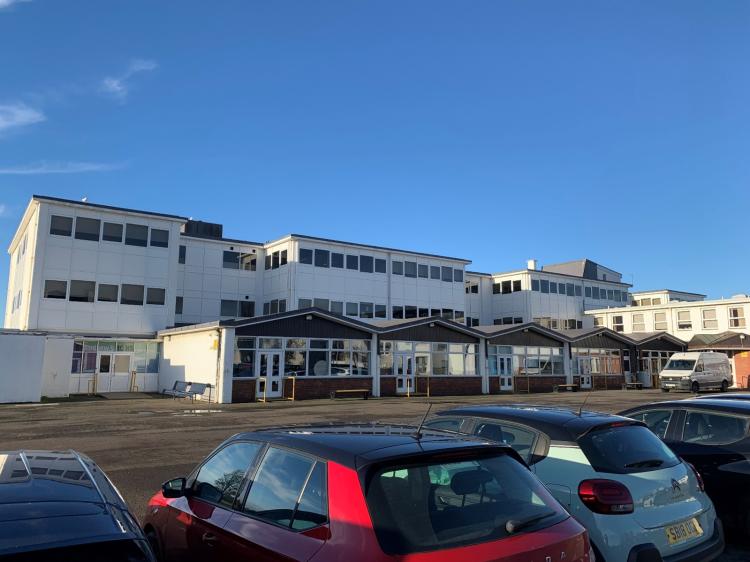
Photo credit: Fife Council
There were three key challenges to overcome with this project:
Firstly, all the work was to be completed in a live school environment, and they had to minimise disruption to learners. This was overcome through careful site planning, offsite manufacture of a modular heating plantroom and utilising holiday periods for the window installation.
Secondly, due to the increased electricity demand of the new heating system, they had to apply for a new substation to be located next to the modular plantroom, they had to work closely with the DNO to coordinate works and agree all the relevant wayleaves for the new substation and cable runs. This part of the project took longer than originally anticipated and we had to use temporary supplies from the school to commission controls and pumps in the earlier stages.
Finally, due to the age of the school there were asbestos removal works required before any plantroom alterations could happen and also in the main school asbestos was found in window seals. The council worked closely with its in-house asbestos team and specialist contractors to identify material which needed to be removed and programmed this work early in the overall programme.
Staff and pupils now benefit from a more reliable heating system that is less prone to failure than the previous ageing boiler plant, helping maintain comfortable classroom temperatures even during the coldest winter conditions.
The windows have made a fantastic improvement to overall occupancy comfort in classrooms delivering more stable internal temperatures for learners. The heating system has been designed to meet the demands of the building even in the worst winter conditions and the controls upgrades allow for the system to be optimised for efficiency at other times of the year.
It can be challenging working in live school environments however with the right procedures, communication and programming it can be achieved whilst minimising disruptions to staff and pupils.
Engage with DNO’s as early as possible to secure power supplies.
The council is continuing to build on what has been learnt from this project and applying that learning to all ongoing decarbonisation projects in the council’s non-domestic building portfolio.


