
'A milestone in Transport for London's journey towards net zero' as first depot goes gas free - video
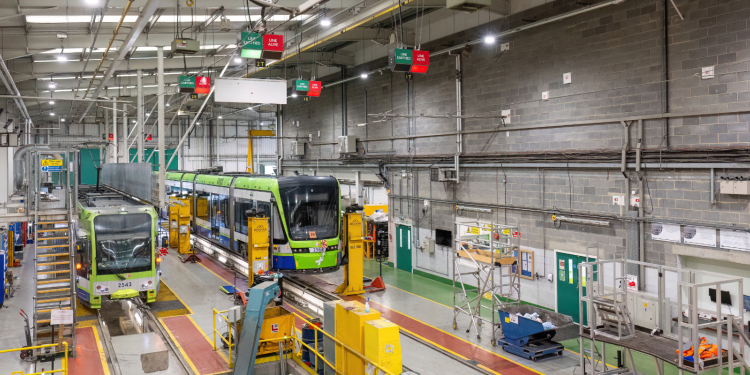
We visit Transport for London's first gas free depot as part of our series celebrating the Low Carbon Skills Fund
- ‘Landmark’ project sees first Transport for London depot go gas free
- Decarbonisation of Therapia Lane in Croydon has ‘shown the art of the possible’
- Measures are expected to save around 183 tCO2e annually
- Project received Low Carbon Skills Fund and Public Sector Decarbonisation Scheme grants, administered by our Salix team
Transport for London's first gas-free depot has been described as a “landmark” project that’s “shown the art of the possible” after upgrade works at the site were completed.
We visited Therapia Lane in Croydon as part of our series celebrating successes of the Low Carbon Skills Fund – delivered by our team at Salix – to learn more about the upgrades that have decarbonised the building.
Hundreds of solar panels are now on the roof of the busy depot, with heat pumps and infrared panel heaters added inside – the measures are expected to save around 183 tCO2e a year.
“The decarbonisation of Therapia Lane depot is a brilliant first example of the kind of projects we need to do right across London in Underground stations, depots and other locations as we look to remove old gas-fired boilers and move to clean green energy,” said Lilli Matson, TfL’s chief safety, health and environment officer.
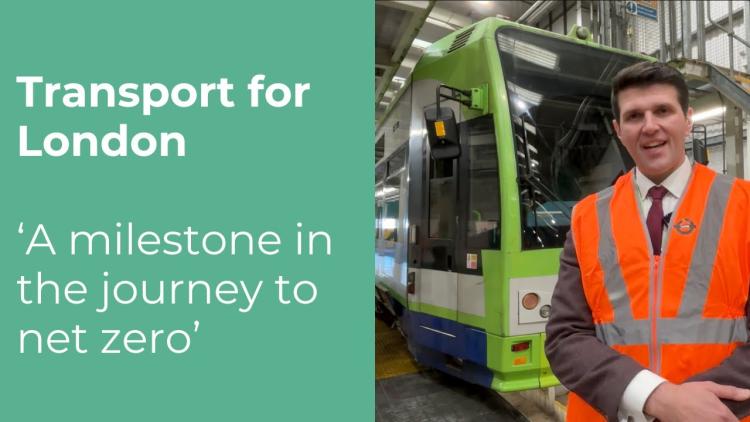
“This is our first net zero building, so this is a real landmark,” said Dan Curry, senior net zero lead for TfL. “It’s the first site we’ve completed, it’s got renewables in the roof fuelling some of the electricity within the building.
“We were concerned about how easy it would be to deliver at a complex site like this. It’s a big, open shed, the doors are often open. The biggest thing we learned from this is that if you can do this here, you can do it anywhere.”
“Transport for London is London’s largest consumer of electricity,” continued Lilli. “Through our trains, our buildings, all of our operations, we have a big demand for electricity and that has a big environmental impact. I’m personally really passionate that we are on the journey to decarbonising all of our operations and our buildings.”
Upgrades at the depot, which form the biggest refurbishment in the depot’s 27-year history, include:
- Low-carbon, electric heat pumps and infrared panel heaters, replacing fossil fuel gas boilers
- 1,800 square-metres of solar panels on the roof
- Improved insulation and LED lighting
- Enhanced hot water delivery through new energy-efficient, on-demand electric water heaters.
'The pilot project within the net zero programme'
The panel heaters target areas where staff work most and minimise ambient heat loss, while the solar panels will generate 187 kWp of energy while the new lighting helps create a brighter and more comfortable working area.
The measures are expected to cut carbon emissions by around 183 tCO2e annually. According to TfL’s calculations, that’s similar to the emissions from a modern housing development.
“Therapia Lane is the pilot project within the net zero programme and as for an example we’ve really shown the art of the possible here,” said project manager James Merci.
“We’ve fully removed gas usage from the depot entirely. We have significant carbon savings of 182 tonnes of CO2 equivalent per year. It’s a big milestone in TfL’s journey towards net zero for our operations where in the future Therapia Lane depot could then be powered by renewable energy from the grid. As the first decarbonised depot within Transport for London it’s a great sense of pride for us as an organisation.”
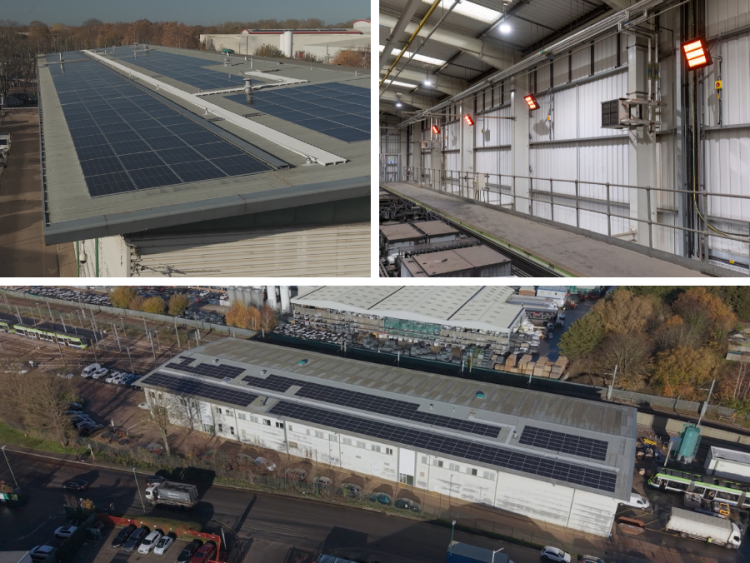
Hundreds of solar panels were built on the roof while inside infrared heaters were directed at the areas where staff work. Picture credit: Transport for London
How the Low Carbon Skills Fund kickstarted TfL's journey
The project was part-funded by the Department for Energy Security and Net Zero’s Public Sector Decarbonisation Scheme, which is focussed on energy efficiency upgrades, and the Low Carbon Skills Fund, which covers heat decarbonisation planning and design. Both were delivered by our team at Salix.
In total, TfL received around £152,000 from Phases 1 and 3 of the Low Carbon Skills Fund and more than £14 million across Phases 3b, 3c and 4 of the Public Sector Decarbonisation Scheme - a proportion of which went towards the improvements at Therapia Lane.
“We didn’t think we had the expertise internally, so we explored the Low Carbon Skills Fund and realised that would give us external expertise and provide the grant funding,” said Dan Curry.
“It really kick-started our journey and led to us being able to benefit from the Public Sector Decarbonisation Scheme and that’s why we’re here today. If we hadn’t had that funding, we wouldn’t have decarbonised this depot.
“As a result of learning lessons from this we’re now decarbonising further sites across our head office and operational buildings, so it’s a real success story.”
James Merci said: “Since we’ve installed these infrared heaters at our various locations we’ve seen instant staff feedback that they’re getting too warm and have had to take off a jacket that they’ve worn into the depot, which is above and beyond what we expected in this environment. So, we’re getting amazing feedback from our stakeholders and I’m sure that others within TfL in other depots might be wanting the same thing for themselves.”
“By combining advanced electric heating solutions with on-site solar generation, we've created a system that is both energy efficient and future ready," said Vital Energi's regional director Scott Lutton. “We're proud to have delivered this landmark project at Therapia Lane, which demonstrates how operational sites can transition away from fossil fuels without compromising performance. This project not only cuts carbon emissions, but also sets a blueprint for decarbonising similar facilities across the UK.”
It's not just Therapia Lane that’s benefitting from the public funding. TfL’s main head office, Palestra House, is getting upgrades including air and water source heat pumps, LED lighting and using smart sensor technology to adjust ventilation, cooling and heating levels. It’s hoped this will reduce carbon emissions by more than 1,500 tonnes annually. Similar technology is planned for other TfL offices including above Aldgate, Baker Street, Oxford Circus and Victoria stations.
Those efforts, TfL said, will be informed by the work at Therapia Lane, which was carried out in a live operating environment working around the clock.
Martin McCluskey, minister for energy consumers, said: "This project shows how clean power is benefitting communities across Britain. It’s creating skilled jobs and strengthening our public services with the potential to create savings that can be invested into improving services for passengers. It is a prime example of the vital part that facilities like Therapia Lane will play in our clean energy transition."
Mete Coban, deputy Mayor of London for environment and energy, said: "It's fantastic news that Therapia Lane depot has become TfL's first depot to remove fossil fuel gas usage. This green transition will help improve energy efficiency and save money, showing that sites like this have an important role in reducing the impacts of climate change.”
“Transport for London is a publicly funded body – every penny counts, so when we can secure external funds that help us on our decarbonisation journey it’s absolutely critical.
“This project wouldn’t have gone ahead without that additional support. So, we’re really grateful for it and will learn so much from having decarbonised our first depot. will help us as an organisation really make that longer term transition.
“The benefits are really big and they’re not just about decarbonisation. We’ve created a working environment which is much nicer for our people working in that depot.”
Salix administerd the Low Carbon Skills Fund from 2020, with Phase 5 being delivered earlier this year, but no future phases are currently planned.


