
How Edinburgh University is reusing heat from a data centre to power a campus
- Students welcome UK first sustainability project at University of Edinburgh
- Waste heat from data centre reused to help power a campus and reduce carbon emissions
- Upgrades part funded by £2 million from Scottish Government, administered by our Salix team
"Something that's really important to me and a lot of people my age is to care about the planet."
Tamsyn Carolyn, a PhD student in organic chemistry at the University of Edinburgh, is among those welcoming a UK first project to reuse heat from a data centre to power a campus.
The University of Edinburgh secured more than £2 million in funding through Scotland's Public Sector Heat Decarbonisation Fund to upgrade heating systems.
"The data centres are running pretty much 24/7 and can heat an entire building. Previously we were just dumping the heat into the atmosphere through the roof, but by reusing it instead we can also reduce fossil fuels," said Prof Daniel Friedrich from the school of engineering.
"Our two business data centres are vital for the running of the university and the research cluster that’s providing the heat for this project is conducting extremely valuable research," said data centre manager Paul Hutton.
The university estimates this will save around 500 kilowatts of heat, which roughly equates to as much as 60 homes.
"Virtually all data centres produce that level, so you generally want to repurpose that and Scotland's a great place to do it becasue it's cold and wet here," he added.
The project, part funded through Scotland’s Public Sector Heat Decarbonisation Fund Phase 1 which is delivered by our team at Salix on behalf of Scottish Government, focuses on using waste heat from a data centre to help heat university buildings and reduce carbon emissions.
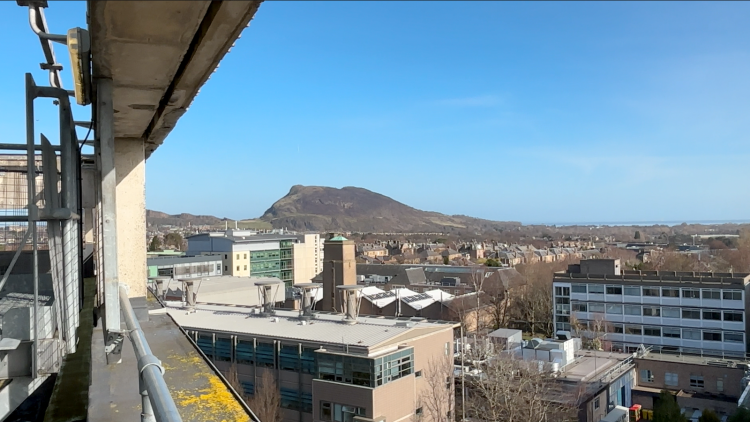
"Previously we were just dumping the heat into the atmosphere through the roof," said Prof Daniel Friedrich. Image credit: Salix Finance.
"All of our work is now computer based and there is the AI revolution going on, so data centres will play an even bigger role in the future," said Prof Friedrich.
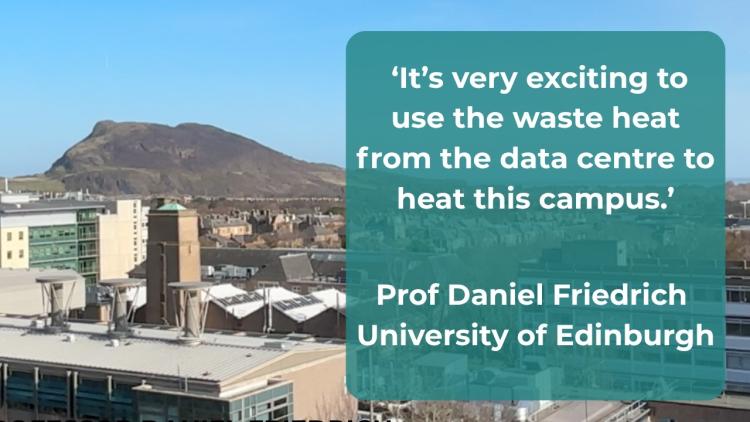
"At the science and engineering campus, data centres are at the core of what we do, so it’s very exciting to use the waste heat to heat the campus and replace some of the fossil fuels we have been using before."
However, this project is just the beginning as the university continues to push boundaries on its sustainbility journey.
"We’re continuing to look at all of our data centres and larger server rooms to assess their potential," said energy engineering manager, Robert MacGregor.
"There are further data centres that we hope to be able to do work on soon. Our long term aim is to reuse heat from our main research data centre, which could heat an entire campus."
In secondary school and university I always tried to take the more sustainable option where available, so it’s really nice to know that I can take the more sustainable option when working day to day as well.
"I’m really excited to hear about these upgrades because when I’m working day to day I don’t have to worry about the impact of my research on the planet. It’s nice to know that I’m going to be able to leave a better planet for people," said Tamsin.
"I’m very interested in progressing my chemistry towards greener solvents and greener chemistry in general. My research in particular is trying to make light-emitting devices more effective and therefore more energy efficient and sustainable.
"I remember growing up I was always involved in green committees in secondary school and university and I always tried to take the more sustainable option where available, so it’s really nice to know that I can take the more sustainable option when working day to day as well."
Fellow PhD student Max Lambert agrees. "When doing science, you’re always using glassware and chemicals. It’s nice to be able to see that we’re taking meaningful steps to balance out the environmental impact that we have.
I try to stay informed as much as possible and make whatever decisions I can on an individual level, but it’s nice to see that large organisations are doing their part as well rather than just relying on individual choice."
'Without the funding delivered by Salix, it would've been more challenging to do'
"We’ve just launched a new regenerative, sustainability strategy at the University of Edinburgh. Within that strategy we have five-year carbon budgets, which are extremely demanding and they include everything that we buy, our estates, and all of our travel – including international students travelling to and from home. Therefore, anything that helps us decarbonise is incredibly helpful," said Scott Davidson, deputy director for social responsibility and sustainability.
Energy engineer John Innes said: "All around the buildings there’s lots of heating pipework that keeps the buildings warm. Some of that had insufficient insulation, so my work was going around and surveying that insulation and reducing the waste heat. Without the funding administered by Salix, it would have been more challenging to do, so it’s great to get the opportunity to be a leader in the UK with this project."


