Keeping the heat on: fire stations cut carbon without missing a beat
Royal Berkshire Fire and Rescue Service maintains round-the-clock hot water for firefighters while upgrading to low-carbon heating and insulation across five stations
Decarbonising fire stations is no small task - especially when hot water must be available at all times to ensure frontline operatives have appropriate facilities so they can maintain life safety critical operations.
Royal Berkshire Fire and Rescue Service has shown it’s possible to cut carbon emissions without compromising firefighter safety or comfort.
Royal Berkshire Fire and Rescue Service secured £927,845 through Phase 3c of the Public Sector Decarbonisation Scheme for a project.
During a recent site visit, our Salix team saw how essential hot water supplies were maintained throughout the transition to low-carbon heating systems, even while stations remained fully operational.
Team members Molly Evanson, Claudia Head, Hira Raashid, Anna Kuratnikova, Eliza Loftus and Altyn Timraliyeva went along to find out more.
They visited Caversham Road and Whitley Wood fire stations in Reading to see first-hand how the Service is cutting carbon emissions while improving comfort for the firefighters and staff who use the buildings every day.
The visit offered an opportunity to meet the teams delivering the work and to understand the challenges of upgrading energy systems in fully operational emergency service buildings.
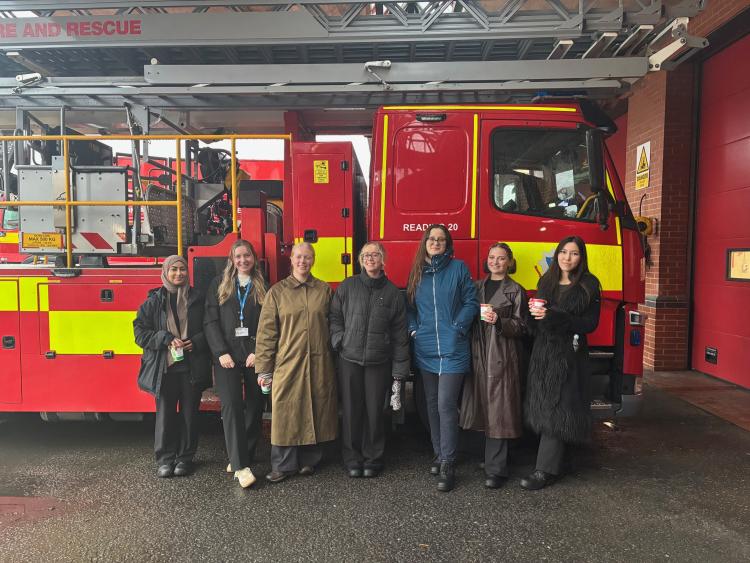
The Salix team on their visit Caversham Road and Whitley Wood fire stations in Reading to see first-hand how the Service is cutting carbon emissions while improving comfort for the firefighters and staff who use the buildings every day
Photo credit: Salix Finance
Carbon savings
The funding will help deliver major sustainability upgrades across five of the Service’s least energy-efficient fire stations: Caversham Road, Whitley Wood, Wokingham Road, Newbury and Langley.
The Service says, that once complete the project is expected to deliver annual direct carbon savings of 136.23 tonnes, with lifetime direct savings of 2,881.73 tonnes.
This means it’s saving the equivalent of about the annual energy use of approximately 80-90 average UK homes.
Royal Berkshire Fire and Rescue Service Sophie Fox Sustainability Officer said: “In line with the Royal Berkshire Fire Authority’s Sustainability Strategy, these reductions will play a vital role in lowering the Service’s carbon footprint while ensuring our buildings are fit for the future.”
The two-year programme includes the installation of air source heat pumps at all five sites, alongside a combination of cavity wall insulation, new windows, solar photovoltaic panels and LED lighting.
During the visit to Caversham Road Fire Station, our team saw newly installed air source heat pumps, upgraded insulation and replacement windows. At Whitley Wood, similar measures are underway, with the addition of solar PV and LED lighting to further improve efficiency.
Sophie Fox explained: “As central fire stations serving communities in and around Reading, these buildings are in constant use. Completing any kind of work on them always represents a challenge.
“As well as operating as emergency response hubs, they also provide living accommodation for staff, including kitchens, offices and bedrooms, so improving thermal comfort and reliability is just as important as reducing emissions.”
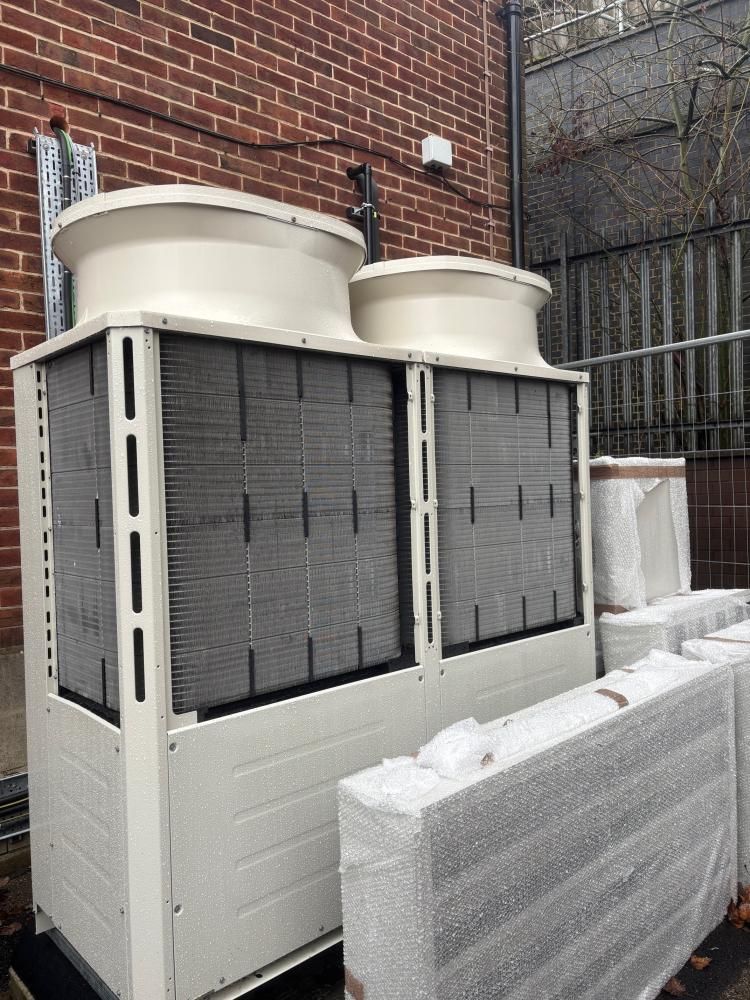
The newly installed air source heat pumps at Caversham Road
Photo credit: Salix Finance
Challenges
Delivering the project has not been without challenges.
All five sites remain fully operational fire stations and essential services could not be disrupted.
One key consideration was the Service’s ‘shower within the hour’ policy, which requires firefighters to shower promptly after returning from incidents to reduce the risk of contamination.
This is particularly important given the increased cancer risks associated with contaminants exposure, as well as the additional risks faced during water and animal rescue incidents.
Maintaining a constant supply of hot water during the transition from gas-fired boilers to heat pumps was critical. Despite the complexity of the works, the Service successfully managed a seamless switchover.
Sophie said whilst a level of disruption is to be expected with any project, the overall impact on station staff was minimal and the improved heating system has been welcomed, noting increased comfort within the stations.
The Public Sector Decarbonisation Scheme project builds on earlier work supported by Salix through the Low Carbon Skills Fund. In July 2023, it secured £40,000 to develop a Heat Decarbonisation Plan covering 11 fire stations across Berkshire.
The plan identified inefficiencies across the estate and set out a clear, phased roadmap for reducing carbon emissions and improving energy performance.
Programme co-ordinator Molly Evanson said: “It’s incredible to see the progress made here at the stations and to meet the teams face to face who have been driving the project.
“At Salix, we spend a lot of time building strong relationships and working alongside organisations as they work towards their net zero goals. Seeing this level of ambition, and the tangible results on the ground, is genuinely inspiring.”
Royal Berkshire Fire and Rescue Service remain committed to delivering its Sustainability Strategy, which aligns with its Community Risk Management Plan for 2023-2027.
The strategy recognises the growing impact of climate change and the need to adapt the Service’s operations and estate to meet future challenges.
We would like to thank the teams at Royal Berkshire Fire and Rescue Service for hosting the visit, sharing their experience and demonstrating how decarbonisation projects can deliver real environmental benefits while improving comfort and working conditions for frontline staff.