
Scheme:
Phase 1 Scotland’s Public Sector Heat Decarbonisation Fund
Technologies used:
Air source heat pump, Double glazing
Region:
Scotland
Client type:
Local authority
Your partner for a low carbon future
Phase 1 Scotland’s Public Sector Heat Decarbonisation Fund
Air source heat pump, Double glazing
Scotland
Local authority
Total project cost
Estimated annual carbon savings
Perth & Kinross Council is reducing emissions across its school estate through a programme of heat decarbonisation projects.
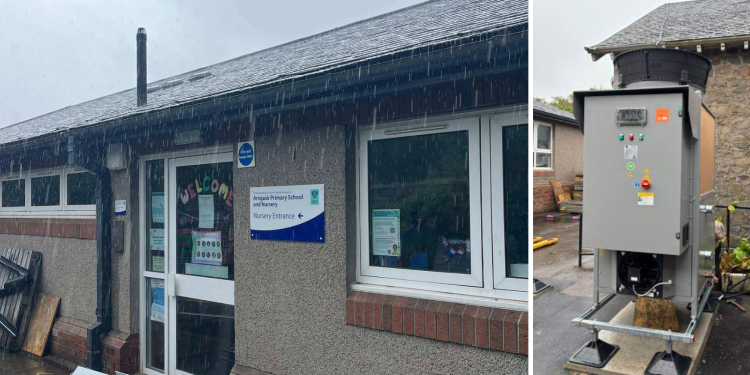
Supported by Phase 1 of Scotland's Public Sector Heat Decarbonisation Fund, the council replaced oil heating at Arngask Primary School with air source heat pumps, upgraded windows and installed low-carbon hot water systems.
The project is expected to reduce annual carbon emissions by 22,100kg while creating a more comfortable learning environment for pupils and staff.
✅ £1.1 million project value
✅ Air source heat pumps installed
✅ Oil heating removed
✅ Double glazing upgraded
✅ Sunamp electric water heaters installed
✅ 22,100kg annual carbon savings
✅ Improved classroom comfort
✅ Supports council-wide decarbonisation programme
Fraser Nicoll, lead officer, energy & decarbonisation/project lead: “The project at Arngask Primary School is the second in a number of rural schools to be decarbonised by Perth & Kinross Council. The heating installation will provide a better thermal comfort for the occupants of the school whilst also contributing to carbon reduction targets and providing no direct emissions from the school."
“The school is small in size; however, it comes with its own challenges with building age and construction, a challenge that PKC has throughout the estate with older buildings."
“The lessons learnt within the project have also benefitted the internal staff at PKC and allowed us to apply those lessons in the design of future projects.”
Arngask Primary School, located in South Perthshire, comprises a primary school dating from 1871 and a nursery building constructed in 2002. The school was heated by oil-fired boilers which were approaching the end of their operational life and required replacement.
As part of a wider programme to decarbonise rural schools, the council upgraded windows to double glazing in summer 2025 before installing Sunamp electric water heaters, new insulated pipework and air source heat pumps. The work was delivered in phases during school holiday periods to minimise disruption to pupils and staff.
Early engagement with the Distribution Network Operator (DNO) was essential, as initial discussions indicated that electrical capacity upgrades may not have been available until 2029. Close collaboration helped identify a solution that allowed the project to progress within the required timeframe.
Decarbonising a rural primary school presents unique challenges. Arngask Primary School combines historic building fabric with newer facilities, requiring careful planning to integrate low-carbon technologies effectively. The project's rural location, existing oil-heating system and electrical network constraints added complexity, while all works had to be carefully phased around school operations to minimise disruption for pupils and staff.
The project has improved thermal comfort throughout the school by providing a more balanced distribution of heat within classrooms. New double-glazed windows also help retain heat more effectively, reducing heat loss and supporting overall energy efficiency.
The removal of ageing radiators has created additional usable wall space in classrooms, while replacing the oil heating system has reduced the risk of heating failures during winter months.
Beyond the physical improvements, the council is using the project as an opportunity to engage pupils with sustainability, helping them learn about low-carbon heating technologies and energy-saving behaviours.
The project demonstrates how rural schools can successfully transition away from fossil fuel heating while maintaining operational continuity. By combining building fabric improvements with low-carbon heating technology, the council has created a blueprint for similar projects across its estate.
One of the project's most important lessons was the need to engage with the Distribution Network Operator as early as possible. Grid capacity constraints can significantly affect project timescales and should be understood before detailed design work begins.
Following the project's success at Arngask Primary School, Perth & Kinross Council plans to continue decarbonising schools across its estate. Lessons learnt from the project are already being applied to future oil-heated school upgrades, helping the council accelerate progress towards its carbon reduction objectives


