
Highs of the Low Carbon Skills Fund
£78 million on more than 1,100 projects...
- More than 1,100 sustainability projects across England benefitted from the Low Carbon Skills Fund
- Impacts continue across libraries and leisure centres, constabularies and classrooms, transport and trampoline parks
- The grants, administered by us at Salix for the Department for Energy Security and Net Zero, ran from 2020 to 2025
- We've made written testimonies and filmed videos featuring our partners from the north east to the south west
From transport to trampoline parks, from libraries to law enforcement and from apprenticeships to award nominations – the Low Carbon Skills Fund has had a huge impact on communities and public buildings across the country.
A total of around £78 million in grants was awarded to more than 1,100 sustainability projects in England such as local authorities, emergency services and schools and universities between 2020 and 2025.
The fund - administered by Salix on behalf of the Department for Energy Security and Net Zero - has now closed, but its effects continue to be felt from energy efficiency savings in buildings to informing future sustainability steps.
To showcase our stakeholders work, we checked in with recipients from Newcastle in the north east to Exeter in the south west, also featuring areas including Liverpool and London.
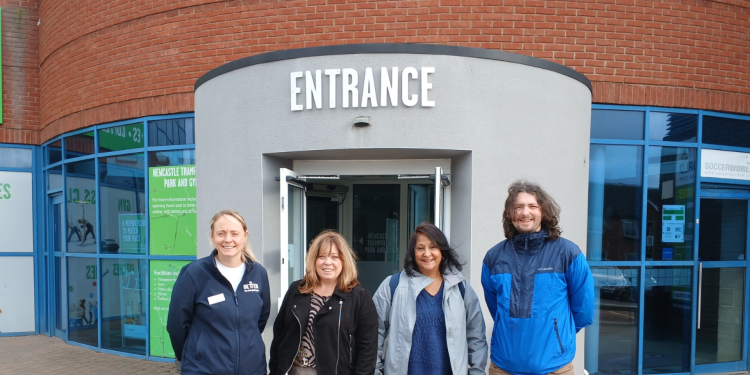
Main picture, from left: Alison Westworth - GLL, Ann Hayward, Farah Hussain and Lloyd Reece - Newcastle City Council. Credit: Salix Finance
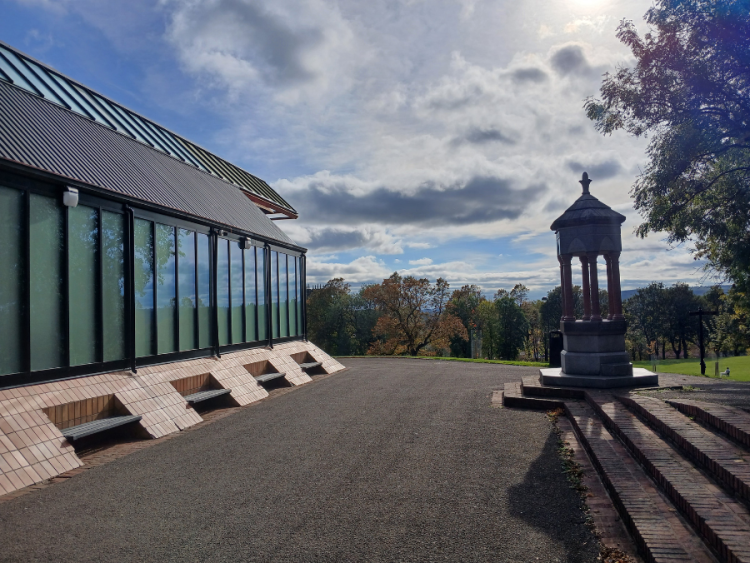
Elswick Community Pool and Gym in the West End of Newcastle also received a grant from the Low Carbon Skills Fund. Credit: Salix Finance
We visited the north east to see how Newcastle City Council had used its Low Carbon Skills Fund grant on a range of leisure services.
Among the projects to benefit here are Newcastle Trampoline Park and Elswick Community Pool and Gym.
“I'm absolutely thrilled that the council used this money and got so far towards our net zero goal while enhancing community facilities" said Farah Hussain, Newcastle City Council's senior project manager. “We've learnt so much and we're much more confident about how we'll complete the net zero journey.”

“Elswick Community Pool and Gym had closed down,” explained Ann Hayward, program officer for Newcastle City Council. The facility was taken over by a community group and re-opened in 2025.
“I know that people in the community wouldn’t have otherwise had the opportunity to take part in leisure, health and fitness activities, and even the life-saving skill of swimming - which otherwise wouldn’t have been possible in this area.
From Tyneside to Merseyside and from pools to policing. “Gaining the Low Carbon Skills Fund and Public Sector Decarbonisation Scheme grants has been a game changer for our force,” said Sharon Luther, Merseyside Police’s sustainability manager.

Merseyside Police said "the animals' welfare has been at the heart of every bit of work we've done." Image credit: Merseyside Police
Like many recipients, they applied for further government grants, again administered by us at Salix. The force used them to upgrade their Mounted Section, home to their horses, in Liverpool as well as their academy at Lea Green, near St Helens. “The aim for both sites is to remove gas as a primary heat source,” Sharon told us.
Projected annual energy savings for the Mounted Section are 53.5tCO2e and 108tCO2e in Lea Green – the total is around the same as driving 1.5 million miles in a petrol car.
Also in Merseyside, Knowsley Council used the Low Carbon Skills Fund to begin energy efficiency plans across its estate.
“The Low Carbon Skills Fund has been crucial in securing external grant funding to install decarbonisation measures in council buildings across the borough,” said Councillor Shelley Powell, cabinet member for communities and neighbourhoods.
They first applied for funding in 2021, which would eventually result in works totalling £4.2 million across libraries, leisure centres and other community facilities.
The Low Carbon Skills Fund isn’t just used on buildings – it reaches our transport too. We visited London to produce a video showcasing Transport for London’s landmark gas-free depot at Therapia Lane in Croydon.

Transport for London's first gas free depot at Therapia Lane in Croydon was developed thanks to the Low Carbon Skills Fund. Image credit: Salix Finance
“We’ve really shown the art of the possible here,” said project manager James Merci.
“We’ve fully removed gas use from the depot and we have significant carbon savings of 182 tonnes of CO2 equivalent per year. It’s a big milestone in TfL’s journey towards net zero for our operations and it’s a great sense of pride for us as an organisation.”
TfL received around £152,000 from two phases of the Low Carbon Skills Fund and went on to successfully apply for more than £14 million through different phases the Public Sector Decarbonisation Scheme.
“The Low Carbon Skills Fund really kick-started our journey and led to us being able to benefit from the Public Sector Decarbonisation Scheme and that’s why we’re here today. If we hadn’t had that funding, we wouldn’t have decarbonised this depot,” said Dan Curry, TfL’s senior net zero lead.
We also learned about the journey of one of TfL's apprentices who was involved with the project.
Finally, we heard from Exeter University about how their Low Carbon Skills Fund grant led to them being nominated for a sustainability prize.
The university is replacing 29 gas boilers across its two campuses as it reduces its reliance on fossil fuels.
These plans were shortlisted at the ADE Awards 2025, run by the Association for Decentralised Energy - a trade body championing low-carbon energy.
'It’s a testament to the hard work of our colleagues, grant recipients and stakeholders'
“We were delighted to deliver the Low Carbon Skills Fund on behalf of the Department for Energy Security and Net Zero, and it’s fantastic to see its continuing impact to such a wide variety of recipients,” said Ian Rodger, director of public sector decarbonisation at Salix.
“From Newcastle to Exeter, it’s a testament to the hard work of our colleagues, grant recipients and stakeholders across the country, to see sustainability projects continue to make a difference by providing renewable energy solutions, from heat pumps to solar panels. The bonus for me too is the impact our grant recipients have on their communities from education to exercise and libraries to law enforcement.
“We continue to analyse the data as well as the progress made by Low Carbon Skills Fund grant recipients, many of whom have gone on to do further sustainability projects after being emboldened and supported by the Low Carbon Skills Fund.
"Hopefully the next time we’re celebrating our success at a trampoline park, I’ll get to go – but the legacy of the Low Carbon Skills Fund has left me with a spring in my step.”


